Mobilestyx Receives Tatva Award For 'Best Mobility Solution Provider'
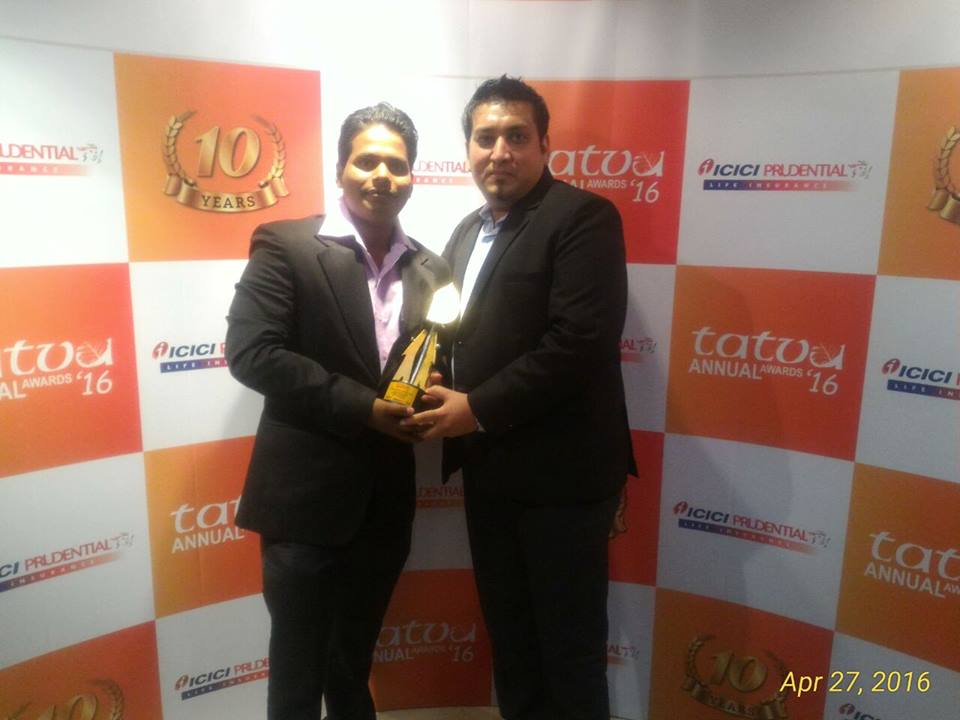
Tatva Awards are provided to the prudential workforce employees and partner companies as an appreciation. This year, the prestigious Tatva Award was received by Mobilestyx Consulting and Solutions for being the BEST MOBILITY SOLUTION PROVIDER.
Mobilestyx has been working for more than 4 years with ICICI Prudential Life. The company has undertaken various projects including but not limited to HR Apps, iPru Atom, iNeo Track, iPru Events and iPru Calendar. These acquired projects were created from scratch and successfully designed by the committed team of professionals at Mobilestyx Consulting and Solutions. The applications developed by the team can be accessed over multiple platforms.
Sandeep Bakhshi, Managing Director and CEO at ICICI honored the company with Tatva Award. Evan D'silva, Head of IT Operations at Mobilestyx says, “We are glad to receive the renowned Tatva Award by ICICI Prudential Life, the chief life insurance company. It feels great to be appreciated and the award stands as a source of encouragement for our entire team”.
5 things you need to know about the Honda BR-V

Honda Cars India's much-awaited 7-seat small SUV is set to be launched today. The BR-V was revealed internationally last year, prior to its India debut at Auto Expo 2016. With the launch just 5 minutes away, we bring you five must-know facts about the BR-V small SUV. 1. This is Honda’s first small SUV in India Manufacturers have been rushing to grab a slice of the small SUV pie, so the BR-V's launch could not have come at a more opportune time. Marking the company’s entry into the growing segment, the BR-V will rival the likes of the Renault Duster and the hot-selling Hyundai Creta. 2. The BR-V is a 7-seater What will give the BR-V a considerable edge over its popular competitors such as the Hyundai Creta and Renault Duster, is its 7-seat layout. Although a longer rear overhang was necessary to accommodate the third row, and it does makes the car look slightly MPV-like from the side, customers are likely to appreciate the extra space and seats.
3. It has 210mm of ground clearance This SUV may bear a resemblance to Honda's MPV, the Mobilio, and unlike the Duster, it doesn't get the option of AWD, but what matters a lot to owners is a good amount of ground clearance to tackle poor Indian roads. To that end it delivers, with 210mm seperating the BR-V's belly and the road, the same as the Duster, you can drive over the rough stuff relatively hassle-free.
4. Based on the same platform as the Mobilio The BR-V shares the same platform as the Mobilio, but comes with a longer wheelbase and a more upmarket-looking dashboard similar to the unit seen in the Jazz, and one that's more suited to the BR-V’s intended segment. 5. Powered by the familiar 1.5-litre Honda engines The BR-V will be equipped with the familiar 1.5-litre petrol and diesel engines from the City and the Mobilio. While initial reports suggested tweaks to the tuning, the engines have been carried forward unchanged. A six-speed manual gearbox is offered as standard, while the petrol gets the additional option of a CVT gearbox. The BR-V is backed by some strong details such as the 7-seat layout and of course, the Honda brand name, to create a strong opposition to the likes of the Creta and the Duster. But with its strong resemblance to the Mobilio, it will be interesting to see how Honda positions the small SUV and the public's reaction to it.
Exclusive: Lear Automotive to supply seating systems to Maruti Suzuki and Honda Cars
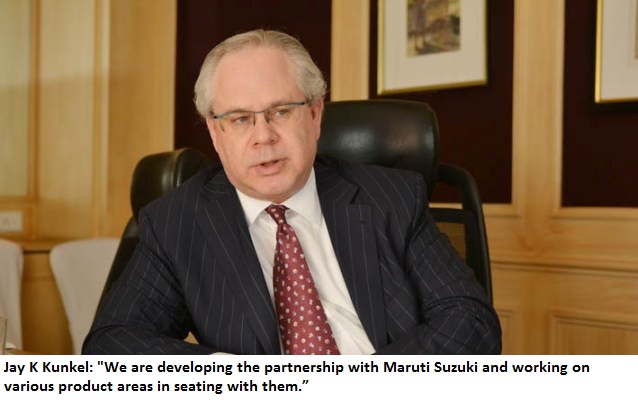
Lear Automotive India, the market leader in seating systems with a share of above 35-38 percent in the Indian market, has for the first time bagged business from Maruti Suzuki India. The company is to supply seating systems for a new model – a hatchback – for which supplies are slated to commence soon. Lear Automotive's key customers in India have been Ford, General Motors and Nissan to name a few. “We have not really been involved in a meaningful way with Maruti Suzuki and that is now changing in the structured business. This is because we now have new structural concepts that revolve around being lightweight, reducing critical mass and also being less expensive. We are developing the partnership with Maruti Suzuki and working on various product areas in seating with them,” Jay K Kunkel, president Asia-Pacific and Member Executive Council, Lear Corp, told Autocar Professional in an exclusive interaction. Kunkel confirmed that this will involve fresh investments in a new manufacturing facility for Maruti Suzuki that could be within the vicinity of its plants, probably at Manesar, though a final decision on the location is yet to be taken. “This needs to happen rather quickly, given the start of production for a new vehicle. So the plans are in place and the capital investment has been determined and what we need to do now is to take the final decision.”
Lear Automotive India has also struck success recently with Honda Cars India. While Honda is its customer in other markets, in India the company was yet to open its innings with the Japanese carmaker. The company is now working with Honda on its new Brio programme on the engineering and programme management side. India will be one of the markets for the new Brio and, perhaps, Thailand and Indonesia as well. This will be a new successor model; while the hatchback will be essentially the same, it will undergo variations depending on the target markets. With new businesses in its kitty, Lear is optimistic of maintaining or improving its position in the seating market while upping the ante in the growing field of automotive electricals and electronics. - See more at: TT-Games
Toyota collaborates with Microsoft to leverage data science
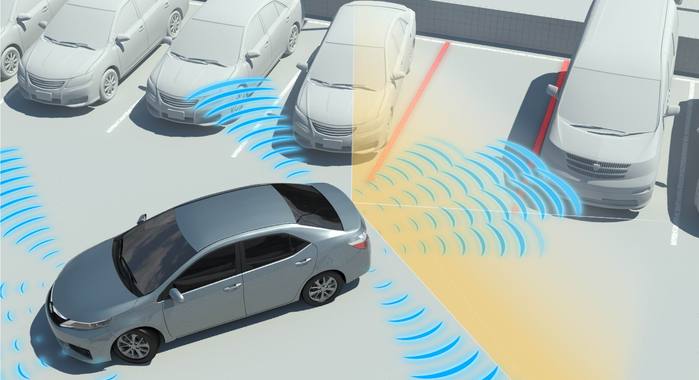
The new company will serve as a data science hub for Toyota's global operations and will support a broad range of consumer-, business- and government-facing initiatives. The launch of Toyota Connected builds on Toyota's global vision of a future of mobility that is clean, safe and convenient. The company will leverage the power of data science through Microsoft's Azure cloud technology to develop predictive, contextual, and intuitive services that help to humanize the driving experience while pushing the technology into the background. "Toyota Connected will help free our customers from the tyranny of technology. It will make lives easier and help us to return to our humanity," said Zack Hicks, Chief Executive Officer of Toyota Connected and Chief Information Officer at Toyota Motor North America.
"From telematics services that learn from your habits and preferences, to use-based insurance pricing models that respond to actual driving patterns, to connected vehicle networks that can share road condition and traffic information, our goal is to deliver services that make lives easier." Based in Plano, TX, Toyota Connected will launch with two mandates: delivering seamless and contextual services, and using cutting-edge data analytics to support product development for customers, dealers, distributors, and partners. In support of these goals, the new company will consolidate Toyota initiatives in data centre management, data analytics, and data driven services development. In addition, the new company builds on Toyota's existing partnership with Microsoft to accelerate R&D efforts and deliver new connected car solutions and elevated customer experiences.
Microsoft engineers will work with Toyota Connected in their new facility, providing continuous support across technology areas and leveraging a broad range of data analytics and mobile programs. Toyota Connected will adopt Microsoft's Azure cloud computing platform, employing a hybrid solution globally. "Toyota is taking a bold step creating a company dedicated to bringing cloud intelligence into the driving experience," said Kurt DelBene, executive vice-president, Corporate Strategy and Planning at Microsoft. "We look forward to working with Toyota Connected to harness the power of data to make driving more personal, intuitive and safe." Toyota Connected's structure builds on Toyota Motor Corporation's global re-organisation into product-based companies, and will focus on expanding Toyota's work in connected and data science technologies. Toyota Motor Corporation Senior Managing Officer Shigeki Tomoyama will be chairman, with Toyota Motor North America Chief Information Officer Zack Hicks serving as Chief Executive Officer.
The structure will allow Toyota Connected to centralize company initiatives across a broad range of emerging technology fields, ensuring that the common focus of all of them is the customer. Program areas will include in-car services and telematics; home/IoT connectivity; personalisation; safety; smart city integration; and a broad range data services for Toyota affiliates, its dealers; fleet services and more. At launch, Toyota Connected is already providing a range of data and computer science services across Toyota's operations, including support for ongoing research into artificial intelligence and robotics and the Toyota Research Institute.
- See more at: TT-Games
Toyota planning more hybrids for India
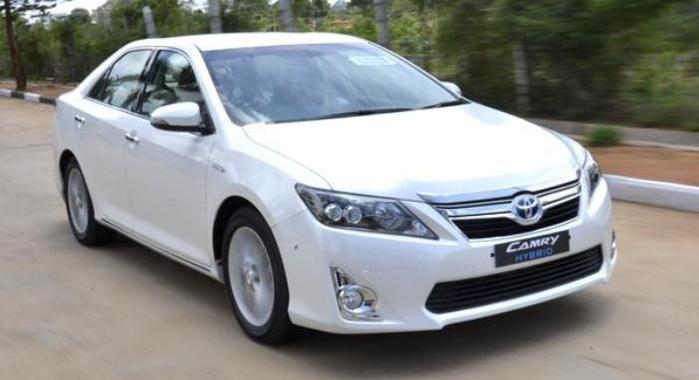
Also, not only is it looking to expand its assembly line, it is also looking at sourcing more bits of its hybrid system from India with the help of technology partner Denso. This move has gained more steam because demand and inquires for Toyota’s hybrid cars have gone up by a huge 50 percent, probably due to the recent fracas over diesel powered cars in the capital. While the company’s flag bearer, the new Prius (based on the new Toyota’s New Global Architecture) would have been ideal, it is a bit too complicated to be assembled here currently.
As a result the Japanese company is studying a whole range of cars to see which model would be better suited. The Corolla is the obvious first port of call. The company only has a hybrid version in the range in Japan, and that’s a bit of a stumbling block, but the car is being developed further to be sold in other markets. And India could be on the list. However, it’s likely to cost a couple of lakhs more, as things stand today.
So the only way Toyota will be able to bring it here is if there are some additional sops in the budget for ‘Make in India’ hybrid cars apart from the FAME scheme or if custom duties and excise have been lowered (duty on hybrid parts is zero percent and excise has been halved from 24 percent to 12 percent). The other option is for Toyota take a longer view and look at launching a hybrid version of the next-gen Vios, slated to be brought to India some time next year.
- See more at: TT-Games
The science of Subterfuge: How Ford uses modern camouflage to hide new vehicles
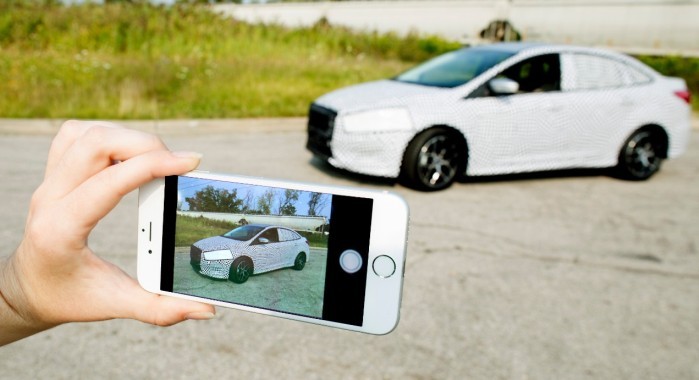
With virtually everyone having a camera in possession these days, spy photographers are omnipresent. Moreover, automakers have a very challenging task to keep their new products under wraps, which must be tested on public roads. For years, Ford has been locked in a high-stakes game of cat-and-mouse with spy photographers – trying to keep its vehicles a secret until it is time for the product unveiling. And now, with virtually everyone able to instantly share photos on the internet, it’s more difficult than ever to keep a car hidden. The stakes are particularly high. Therefore, in order to protect its secrets from professional and amateur photographers alike, engineers are developing new ways to hide Ford prototypes using modern camouflage designs and techniques.
Dave Fish, senior vice president, expert services at MaritzCX, which conducts the new vehicle customer study said, “While design is the fourth most important reason for purchase in the industry overall, it’s number two only behind fuel economy for Ford. It’s not surprising Ford goes to extraordinary lengths to try to keep the wraps on its designs as long as possible.” Gone are the days when unsightly black vinyl was the only way to hide a vehicle. Now, this heavy cladding that’s difficult to apply is used in only a small percentage of testing, as Ford is employing more effective methods for concealing its vehicles throughout product development.
Primarily, the US-based carmaker is using vinyl stickers with patterns that trick the eye and hide body lines to cover its vehicles. The modern patterns create an optical illusion that makes it difficult to see details. Such techniques result in obscure photographs, allowing Ford not only to hide its products from spy photographers, but to preserve its confidential designs and sustain its competitive edge. “The work we’re doing is crucial to Ford staying competitive in a constantly evolving industry,” said John LaQue, Ford section supervisor, Prototype Planning and Build. “When we make it to a reveal without a photo surfacing of a non-camouflaged car, we have all done our jobs.”
Each type of camo serves a purpose through various stages of development. Unlike vinyl cladding, vinyl stickers are universal – they don’t have to be made specifically for each vehicle. Stickers are stuck on the car in no particular order, are quicker to install and more durable, plus they allow for more accurate testing as they don’t add as much weight. The stickers don’t trap heat, nor do they so dramatically affect the aerodynamics of the vehicle. Ford’s camouflage team can even change the shape of a vehicle to further mislead spies. The use of faux body panels can drastically change the look of a car, so an observer doesn’t know what the real vehicle looks like. Adding length or height is a key misdirection used to keep the true dimensions of a vehicle under wraps. As camera technology gets more sophisticated and even more readily available, engineers are working to advance vehicle camouflage techniques to keep the automaker one step ahead of the spies.
Source: India Auto Car
After Japan, made-in-India Balenos to reach Europe soon
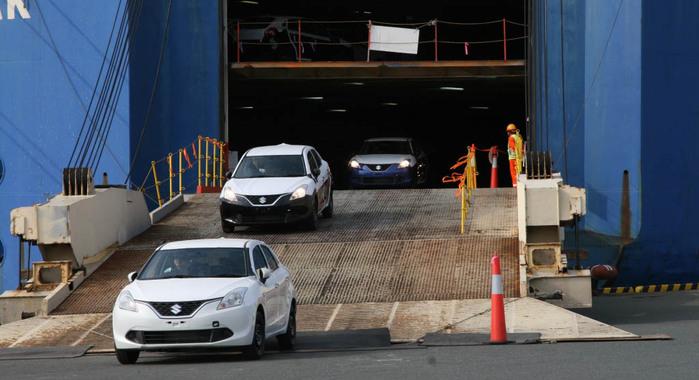
Even as the first lot of 1,760 manufactured-in-India, right-hand-drive, petrol-engined, automatic export model Baleno hatchbacks are being unloaded at the Toyohashi Port in Japan, Autocar Professional learns that six European countries – Germany, Italy, Belgium, Poland, Slovenia and Spain – are next in queue. A total of 854 Balenos, most of them left-hand-drive cars, have been shipped to these countries on February 9-10, all from Mundra Port, pointing to the growing importance of this Gujarat port for the carmaker. Within Europe, Germany tops the list with a total of 436 units, followed by Italy (167), Belgium (113), Poland (93), Slovenia (38) and Spain (7). All these Europe-bound Balenos are powered by the new 1242cc DualJet, a dual-injection petrol engine which, according to Suzuki Motor Corp, has "improved thermal efficiency that strikes an excellent balance between power performance and fuel efficiency." It is also learnt that a single diesel-engined Baleno was shipped to South Africa from Mumbai Port Trust on January 5.
The Baleno, which is a global Suzuki model solely manufactured in India, will give a fillip to Maruti Suzuki India’s export numbers. The carmaker, which plans to aggressively export the Baleno to over 100 markets worldwide, had set an initial export target of 5,000-6,000 units a month to Japan and Europe. It may be recollected that Autocar Professional had broken the news about Maruti exporting the Balenos to Japan on October 26, 2015.
The exclusively made-in-India Baleno was launched in New Delhi on October 26, 2015 and its Japanese specification was also showcased at the Tokyo Motor Show. With 31,573 units sold between October 2015-January 2016 in the domestic market, the Baleno has become one of the star performers for Maruti Suzuki India.
Source: Luxury Car India
BMW Group starts 2016 with a 7.5% increase in sales for January
Following its most successful sales year, the BMW Group achieved a record numbers of sales in the first month of the new year. The Group sold a total of 152,879 BMW, Mini and Rolls-Royce vehicles globally in January 2016, an increase of 7.5% on the same period last year. “We are pleased to see the sustainable levels of growth we achieved in 2015 continuing into this year,” said Dr Ian Robertson, member of the board of management of BMW AG responsible for global sales and marketing BMW. “Despite many markets showing continuing volatility, we remain optimistic that this positive trend will continue through 2016, our company’s centenary year,” he added. German luxury-carmaker BMW’s sales increased by 7.5%, with a total of 133,883 units delivered around the world in January. The growth was driven by a variety of models as the BMW 1 Series increased sales by 22.9% (12,324) while the new BMW X1 grew sales of that model by 60.4% compared with the same month last year (14,308). Combined sales of the BMW 2 Series Active and Gran Tourers in January reached 8,249 units. The BMW X family remained increasingly popular in all vehicle classes as sales of the BMW X3 increased by 16.6% (10,777) while sales of the BMW X6 increased 24.2% (3,587). Sales of the brand’s flagship, the new BMW 7 Series, achieved a 26.3% increase year-on-year with 3,392 units delivered worldwide. Meanwhile, BMW’s i vehicles saw sales of 1,255 units. Following record sales in 2015, Mini achieved its best-ever January with a total of 18,867 vehicles sold worldwide (+8.6%). The Mini 5 door was one of the brand’s main growth drivers, with sales increasing 49.2% (5,783). The new Mini Clubman’s strong start continued into January with a total of 2,300 units delivered worldwide.
Sales by region Sales trend in Europe continued to remain upbeat in January with deliveries of BMW and Mini vehicles increasing by 10.9% YoY (61,737). Several markets achieved double-digit growth including Italy (+16.2% / 5,907), France (+18.8% / 5,273) and Spain (+25.5% / 4,417). The region’s two biggest markets for the BMW Group, Germany and the UK, also grew sales in January: 20,009 new BMW Group vehicles were registered in Germany (+2.4%) while UK sales grew by 2.3% (9,453). On the other hand, sales in the Americas were affected by the storms which disrupted large parts of the USA in January. A total of 26,667 BMW and Minis were delivered in the region in the first year of the month (-2.9%).
Although sales in the USA were 4% down on the same month last year, deliveries in Canada and Mexico rose 9.8% (2,280) 13% (1,430), respectively. Meanwhile, the Group posted an increase in sales in Asia by 9.8% (59,522) YoY. In Mainland China, deliveries rose 8.4% (43,441), sales in South Korea increased 13.4% (4,587) and deliveries in Japan climbed 19.3% (3,833). The year also began well for BMW Motorrad, which achieved a sales increase of 19.6% compared with January last year. A total of 7,488 BMW motorcycles and maxi-scooters were sold globally in the month, making it the division’s best January.
Source: Luxury Car India
Royal Enfield enters adventure bike segment with Himalayan
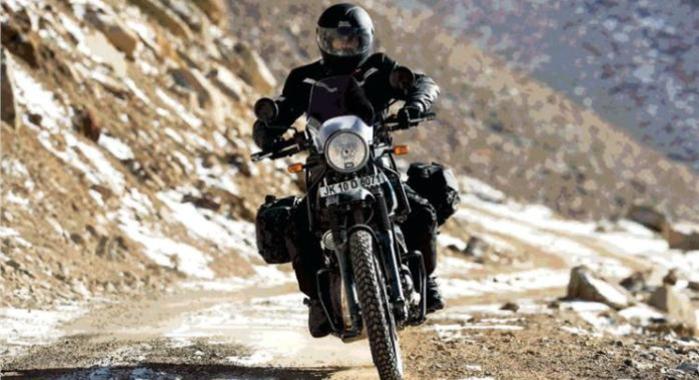
Royal Enfield, which has been riding a success wave of demand for the past 18 months, today unveiled its first touring adventure motorcycle, the rugged Himalayan. Revealing the new product, Siddhartha Lal, MD and CEO Eicher Motors, said: "The Himalayan is the first grounds-up new Royal Enfield motorcycle since Eicher took over." The Himalayan is a step up from the Royal Enfield Bullet 350 in that it is powered by an all-new overhead cam 411cc long-stroke engine which develops 24.5bhp and 32nm of torque. The motorcycle’s kerb weight is 182kg, lesser than the C350 despite it wearing the bits required for adventure riding. The riding gear is designed in collaboration with Dutch brand Revit. The monoshock suspension at the rear is a first for Royal Enfield and a must for this nature of motorcycle which has to tackle difficult terrain. According to Lal, the Himalayan is “purpose-built to take on the Himalayas but it is not extreme.”
The Himalayan comes with a comfortable, upright riding position. Keeping the average height of Indian riders in mind, Royal Enfield has built its new adventure bike to be accessible enough, yet giving it generous ground clearance. The Himalayan comes with on and off-road tyres, and you find a larger 21-inch wheel in front, and a 120/90 x 17-inch unit at rear; both rims using wire spokes. Single rotor disc brakes are provided front (300mm) and rear (240mm). Royal Enfield claims the Himalayan’s service interval is as long as 10,000km and that the motorcycle will deliver equally well on-road and off it.
Speaking to Autocar Professional, Rudratej Singh, president, Royal Enfield, said: “With products like the Continental GT and the Himayalan, Royal Enfield is trying to nudge more buyers into leisure motorcycling and also at the same time trying to remove the intimidating factor (about adventure biking) from the minds of people.” Commenting on foreign growth market, Singh added, “ASEAN, Latin America and Europe will be our key focus areas for exports. We could be looking at China too, not as a country but certain key cities like Shanghai.” The company, which has averaged monthly sales of 40,116 units during the April 2015-January 2016 period, is optimistic about speedier growth. “At present, Royal Enfield has less than 5 percent market share. This means there is a lots of headroom still for the brand to grow in India, even as we expand abroad,” said Siddhartha Lal. The Himalayan will be officially launched in March this year.
Source: Luxury Car India
Tata Motors announces third season of T1 Prima Truck Racing Championship
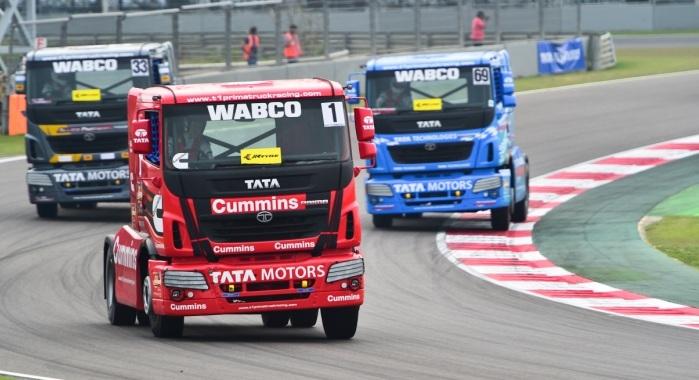
Tata Motors has announced season III of the T1 Prima Truck Racing Championship 2016, scheduled to be held on March 20, 2016, at the Buddh International Circuit (BIC), Greater Noida. The latest season of the T1 Prima Truck Racing Championship will also feature an Indian truck driver’s race for the first time. Like in the earlier seasons, the championship will continue to host experienced international drivers representing six teams, featuring 12 Tata Prima race trucks built for the purpose. The CV-maker has also conceptualized and introduced a new Indian Truck Driver Race selection and training program based on the company’s objective of making the profession of truck driving aspirational and at the same time act as a catalyst to induct drivers into the commercial vehicles profession. The Indian truck drivers will be selected from a pool of drivers who are employed with Tata Motors’ customers all over the country. In all, the company will have 12 Indian truck drivers at the T1 Prima Championship.
Commenting on the occasion, Ravindra Pisharody, executive director, Commercial Vehicle Business Unit, said, “We at Tata Motors are delighted to host season III of the T1 Prima Truck Racing Championship, a much-awaited calendar event and one of the most pioneering in the country’s commercial vehicle industry & India’s motorsports history. Ever since it was first introduced in 2014, T1 has proved to be a great platform to showcase the prowess of the Indian commercial vehicles industry and that of Tata Motors, and Season III presents us with a great opportunity to launch our next big initiative – Indian Race Truck drivers.” Explaining the truck driver race training & selection program, Pisharody added, “Hand-picked through a rigorous driver training and selection program from a pool of commercial vehicle drivers, we are proud to have collaborated with our customers for a shared vision in promoting the profession of truck driving.
We are excited and honored to have these individuals as the newest members of the T1 Prima Championship.” The Indian truck drivers will have a separate category named ‘Super Class’ at the race day event, while professional international drivers will race under the ‘Pro Class’ tag. The Truck Racing Championship is organized by MMSC (Madras Motor Sports Club) and is inscribed on the calendars of FIA (Federation Internationale de l’Automobile) and FMSCI (the Federation of Motor Sports Clubs of India).
Source: TT-Games
Ravindra Pisharody elected as vice-president of SIAM
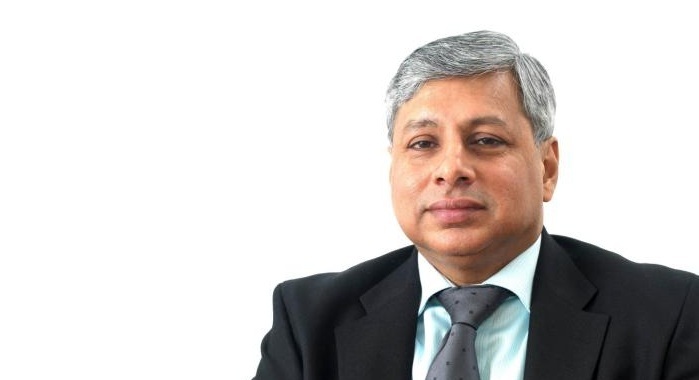
Ravindra Pisharody, executive director of Tata Motors (Commercial Vehicles), has been appointed vice-president of the Society of Indian Automobile Manufacturers (SIAM), the apex industry body representing vehicle and vehicular engine manufacturers in India. Pisharody was unanimously elected for the post by the SIAM executive committee. Pisharody, a senior management professional with over 30 years of executive experience, has held national/ regional/ global leadership roles in sales, marketing, business management and strategy development.
Apart from being the executive director (Commercial Vehicles), he is also on board of various Tata Group Companies such as Tata Marcopolo Motors, Tata Cummins, Tata International, Tata Daewoo Commercial Vehicles, South Korea and Tata Motors South Africa. Pisharody holds a BTech in electronics engineering from IIT Kharagpur and a post-graduate diploma in management from IIM, Calcutta.
Commenting on his new responsibility at SIAM, Ravindra Pisharody said, “I look forward to my new role as the vice-president. I understand that the role would be challenging and I would like to pitch in with my contribution and help strengthen the team further so that we can move towards our common goals.”
Source: EXECSPIN
Mercedes-Benz India launches GLE 450 AMG Coupé at Rs 86.4 lakh
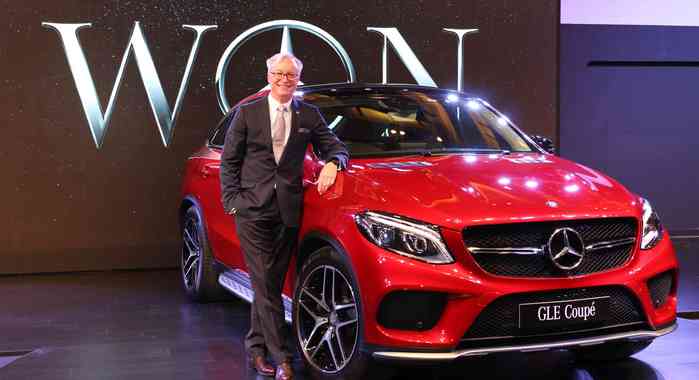
Mercedes-Benz India, which closed 2015 on an all-time high of 13,502 unit sales (+32%), today launched its first car of 2016 – the GLE 450 AMG Coupé at Rs 86.4 lakh. The crossover-coupé is based on the recently launched regular GLE SUV, and sports a distinctive swooping roof-line. The nose features a single-slat grille flanked by LED headlamps and an aggressive looking bumper, while the roofline terminates into an S-class coupé-like rear end. Plastic body cladding, splashes of chrome up front and at the rear, a dual exhaust system and 21-inch wheels complete the 2.2-tonne crossover’s aggressive design.
The coupé carries over the standard GLE’s interiors, but is more luxurious, given the generous use of perforated Nappa-leather all around the cabin. Other highlights of the interiors include carbon-fibre trim, a sport steering wheel, sport seats, stainless steel pedals and the latest Comand infotainment system. The 450 AMG is powered by a twin-turbocharged 3.0-litre V6 petrol engine that develops 362bhp and 53kgm of torque, which enables the crossover to complete the 0-100kph dash in a sportscar-like 5.7 seconds. Power is sent to all four wheels via a nine-speed automatic gearbox that offers five driving modes – comfort, slippery, sport, sport+ and individual. Each mode modulates chassis, suspension, steering wheel and powertrain settings as per driving and terrain conditions. Speaking at the launch in Mumbai today, Roland Folger, managing director and CEO, Mercedes- Benz India, said, “We kick-start 2016 by introducing a thrilling and powerful product from our global portfolio – the GLE 450 AMG Coupé. The GLE 450 AMG Coupé is a valuable addition to our versatile SUV portfolio in India.
This one-of-a-kind performance SUV is sure to delight the customers with its raw power output level, exhaust system, a sleek design with multifarious features and an active sports light system.” The GLE 450 AMG Coupé will go up against the BMW X6 and the Porsche Cayenne Turbo.
Tesla Motors ranked most innovative auto company; Tata Motors is 26th
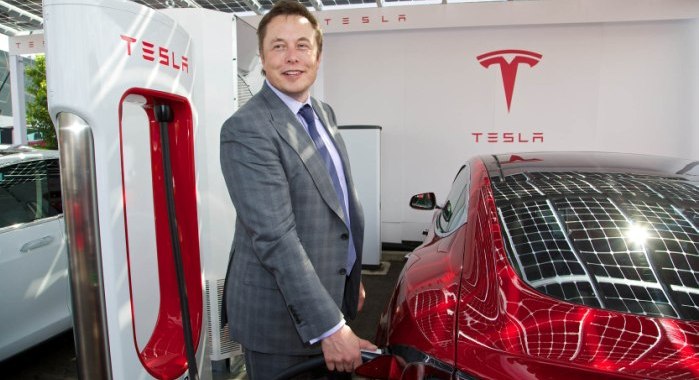
Innovation continues to rise in importance. In The Boston Consulting Group’s (BCG) 10th annual global survey of the state of innovation, 79% of respondents ranked innovation as either the top-most priority or a top-three priority at their company, the highest percentage since the survey began in 2005, when 66% said innovation was their top or among their three top priorities. The BCG perspectives researching the most innovative companies evaluated the state of innovation over the past 10 years ― which also includes the market downturn at the end of the last decade.
The results are tabulated from BCG's survey of thousands of senior-level executives around the world, identifying the 50 most innovative companies each year. Apple and Google continued to hold the top two spots in the list followed by Tesla Motors, which has been moving up the list at the speed of one of its Model S sedans. Fast-tech companies, tech-savvy automakers, and a company that exemplifies scientific expertise combined with lean R&D in the pharmaceutical industry complete the top 10.
Toyota at No 6, BMW at No 7 and Daimler at No 10 rounded up the automotive companies in the top 10. Domestic carmaker Tata Motors was a first-time entrant at the 26th spot, the highest for an automotive company outside the top 10. French carmaker Renault at No 33 and Wolfsburg-based Volkswagen 35 were the other automakers in the Top 50 list. Toyota is slated as the most innovative of traditional automotive companies as it maintained its position in the top 10 eight times in the last 10 years.
Mahindra First Choice Wheels expands footprint in India for growth
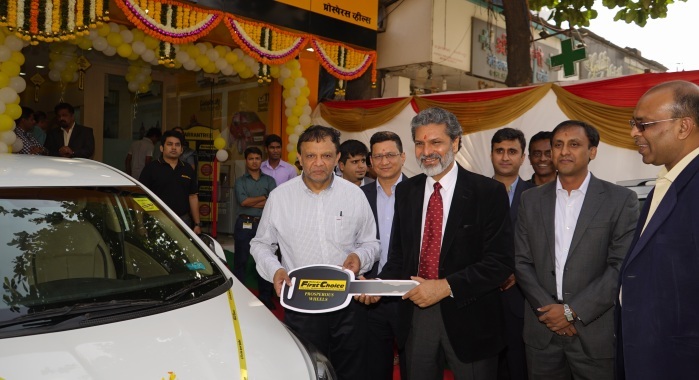
Multi-brand certified used car company, Mahindra First Choice Wheels, today inaugurated its 700th outlet in the country at Mumbai. The franchise based enterprise opened its latest outlet, 25th in Mumbai and 85th in the state, in partnership with Prosperous Wheels. Spread across 1000 sq. ft the dealership is located at Andheri. It was inaugurated by Rajeev Dubey, president (Group HR Corporate services and After Market) member of group executive board, Mahindra & Mahindra. “We are creating a transformational change in the way we provide value to our stakeholders. To create a vibrant used car ecosystem, we are enhancing and leveraging our physical and online presence and are best positioned in the pre-owned car industry to deliver a “Brick and Click” synergy interface for a unique customer experience,” Dubey told Autocar Professional, adding that the company is on track to grow its presence and would end the financial year 2015-16, with 750 outlets in the country.
“Our emphasis is on the tier II and tier III cities, with almost 400 outlets in these places. The Indian used car market has tremendous potential and we have close to 60 products and services to cater to this growing market” Dubey added. Competition landscape The pre-owned car market is flooded with players running various online portals. Carnation, Cardekho, CarTrade, ZigWheels and Droom are some of the major platforms in the segment. Despite OLX and Quikr being multi-category classifieds, they can also be considered competition. These portals have raised huge amounts of funding in the past few years. In January this year, Cardekho raised $50 million in a round of funding led by Chinese funds Hillhouse Capital and Tybourne Capital. In October 2014, Cartrade raised $30 million from Warburg Pincus, Tiger Global and Canaan Partners. In July 2015, automobile-focussed marketplace Droom raised $16 million funding in Series A led by Lightbox. The market is still hugely fragmented and Mahindra First Choice hopes to solve the real pain points of the vehicle transaction process like transparency and reliability. “The classifieds and online portals are our biggest competition. Used car business is like a contact sport, one cannot be successful in this business without physical presence. We are confident that we will maintain and grow our share in the market as we have online presence to provide information to the customers and the complimentary brick and mortar set up to deliver,” explained Dubey.
CV Business Mahindra First Choice ventured into the commercial vehicle space one and a half years ago and has grown by leaps and bounds since then. With 230 CV outlets in the country now, the company aims to complete 14,000 transactions by the end of FY 2016. The company primarily deals in light commercial vehicles of up to 3.5 tonnes through franchisee outlets. “Right now we are focusing only on LCVs and mainly pick-ups. There aren’t many organised players in the CV business and it is a great opportunity for us. We are not looking to venture into M&HCVs at this point,” said Dubey. With a strong emphasis on increasing its reach in the country through the franchisee model, growth in the CV business and an improved online presence, Mahindra First Choice Wheels looks to emerge as one of the largest players in the India used car market in the near future.
Mahindra’s upcoming compact SUV is the KUV100
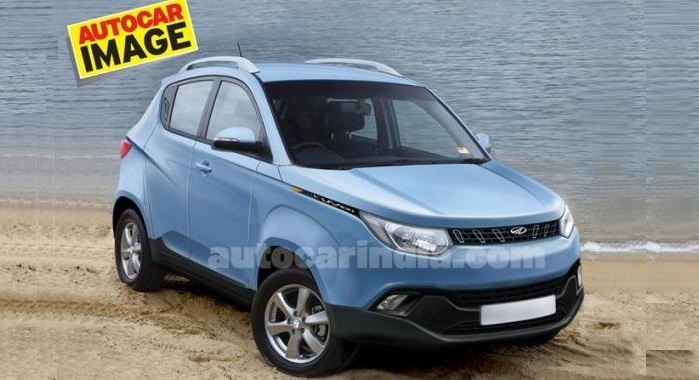
Mahindra & Mahindra will name its upcoming compact SUV, the KUV100. Earlier rumored to be called the XUV100, this new model is currently known by its codename S101. Sources told Autocar India, Autocar Professional’s sister magazine, that the rationale behind naming the latest Mahindra as the KUV100 is that the company wants to position it as a completely different vehicle from its popular XUV500 SUV. Also, another key reason is that M&M did not want to dilute the XUV500 brand (commonly known as XUV in the mass-market) with a smaller and cheaper vehicle. The ‘K’ in the ‘KUV100’ moniker stands for ‘Kompact’, company sources told Autocar India.
Official details of this new sub-four-metre SUV will be revealed by the carmaker on December 18, 2015. The KUV100 was seen recently with only few of its exterior bits veiled. It gets a cab-forward design, where the A-pillar starts just aft the front wheel arch, which indicates more interior room. It gets a longish wheelbase and the overall profile is unmistakably more compact crossover than SUV. It gets a crossover-like stance and pillar-mounted door handles for the rear doors – similar to the ones on the Chevrolet Beat. A thick, curved character line runs from the rear door all the way towards the rear hatch. The tail-lamps are large but simple, and merge with the boot lid. The vehicle gets part black, part body-coloured rear bumpers, as well as cladding along its sides. There is a prominent rear spoiler present as well. Higher-spec variants will come with alloy wheels and with the option of a chrome trim. An earlier set of spy pictures revealed few details of the crossover’s interiors. The KUV100’s cabin has a single binnacle instrument cluster, with two rectangular AC vents that sit on top of the centre console. There are multiple buttons that could be multimedia controls, and some space for a small screen too.
Under this are three HVAC switches positioned vertically. Interestingly, the S101 gets a bench seat in the front, with the gear lever moved to the dashboard, like in the Datsun Go. The Mahindra KUV100 will come with an all-new set of 1.2-litre, three-cylinder petrol and diesel engines. While the diesel motor will deliver an estimated 75bhp, the petrol will be good for 80bhp. Like the TUV300, it will get an AMT transmission as well. According to sources, the base KUV100 will be priced around Rs 4 lakh, which will put it right in the middle of the mass-market compact hatchback category.
Source: Luxury Car India
Honda recalls 64,428 City and 25,782 Mobilio diesels to replace fuel return pipe
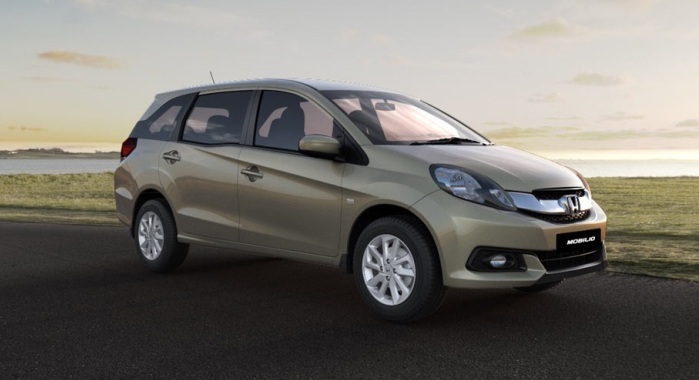
Honda Cars India Ltd (HCIL) is to recall 64,428 units of diesel variants of the City sedan manufactured from December 2013 to July 2015 and 25,782 units of diesel variants of the Mobilio MPV manufactured from June 2014 to July 2015 to voluntary replace the fuel return pipe. The company cites that “there is a possibility that in some of these cars, the fuel return pipe may come out, resulting in fuel leakage and leading to engine stoppage.”
The fuel return pipe and related parts will be replaced free of cost at HCIL dealerships across India from December 19, 2015 in a phased manner and the owners will be contacted individually. HCIL says customers can also check whether their car is covered under this campaign by submitting their 17 character alpha-numeric Vehicle Identification Number (VIN) on the special microsite which has been created on the company’s website (www.hondacarindia.com). This is the fifth recall issued by Honda Cars India this year. In May it had recalled 10,805 Accords, 575 CR-Vs and 1 Civic for replacement of a side airbag inflator. Then in September, it issued a recall for 223,578 cars comprising the CR-V, Civic , City and Jazz, also to replace airbag inflators.
With the latest recall accounting for 90,210 cars, Honda’s total recalls for this year till now stand at 325,169 units. Between July 2012, when the Society of Indian Automobile Manufacturers' (SIAM) Voluntary Code on Vehicle Recall came into effect, the total recalls by Indian vehicle manufacturers now stand at 1,847,283 units.
Evan D'silva Ties-up with Northern Designs

Mobilestyx conveys quality solutions for an extensive range of business worldwide; which include but not limited to Jaguar Land Rover, Prudential, General Motors etc.
With the collaboration now, Northern Designs not only gets a global exposure but also gets backing and support from a 10 yrs experienced team for both Mobility solutions and Web Application.
Northern Design can easily provide timely and quality mobility services not only to the people in Canada, but also to the other places like India, US and UK. The collaboration is an expansion in facilitating clients succeed in world’s rapidly evolving IT markets.
Evan Dsilva, Head of IT Operations, Mobilestyx Consulting and Solutions said: “It feels good to collaborate with Northern Designs to connect the local clients of Canada. It is a base for our expansion around the globe and Canada is one of our premium choices.”
Source: Exec Spin
Hyundai Creta receives handsome market response, in India and worldwide
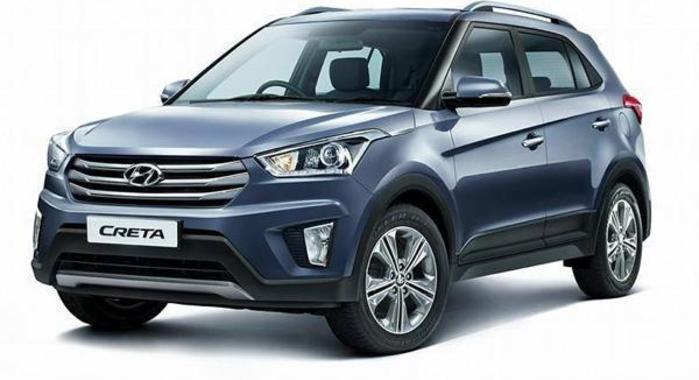
Hyundai Motor India has said that its Creta SUV has received a solid market response and has recorded over 70,000 bookings and 340,000 enquiries in India and over 15,770 orders globally. Commenting on the response to the car, Rakesh Srivastava, senior VP, Sales & Marketing, HMIL, said, “The Creta launched in July as the perfect SUV is a trendsetter in the Indian market.
The Creta heralded a new chapter in Hyundai’s success story across the world showcasing HMIL’s success of ‘Make in India’ manufacturing initiative. We have received a strong response from world markets. Our goal is to maximise our production to make 10,000 units of the Creta to meet global customers’ demand while maintaining our leadership position in the domestic market. Hyundai says, as in India, the Creta has received a good response in global markets such as Latin America (Colombia, Costa Rica, Peru & Panama), Middle East (Oman, UAE, Saudi) and Africa (Egypt, Morocco & Nigeria). Now the carmaker plans to expand its exports of the Creta to new markets soon.
Based on Hyundai Motor’s Fluidic Sculpture 2.0 Design philosophy, the Creta is available in three engine options – 1.6 Gamma Dual VTVT, 1.6 U2 CRDi VGT, 1.4 U2 CRDi. In India, Hyundai Motor India has sold a total of 278,879 units in the April-October 2015 period, up 15.70 percent year on year. On the export front, the carmaker has shipped a cumulative 100,464 units, down 12 percent.
Mercedes-AMG GT S launched for Rs 2.4 crore
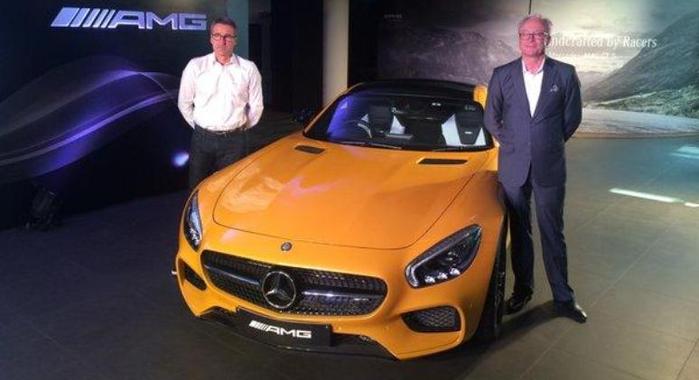
Mercedes has launched its flagship sportscar, the AMG GT S in India priced at Rs 2.40 crore (ex-showroom, Delhi). Internationally the car is available in two variants – the standard GT and the more powerful GT S, of which the latter has been launched today. The sportscar from Mercedes-AMG was launched by five-time DTM champion, Bernd Schneider. Powering the AMG GT S is the 4.0-litre twin-turbo V8 developing 503bhp – 47bhp more than the standard AMG GT – paired to a seven-speed dual-clutch automatic gearbox with drive channelled to the rear wheels.
The AMG GT S comes equipped with Mercedes’ Drive Mode selector offering five modes – Comfort, Sport, Sport+, Race and Individual. The AMG GT S gets a front-mid mounted engine layout with the engine located behind the front axle while the gearbox is located between the rear wheels for better weight distribution. Furthermore, the engine features a dry sump allowing it to be placed closer to the ground. The twin-turbos are located inside the ‘V’ of the cylinder bank allowing for a shorter intake and hence better response time. To keep the weight of the car low, the prop shaft from the engine is made from carbon fibre while the wheels are centre locking units. This allows the AMG GT S to sprint from 0-100kph in a claimed time of 3.8 seconds. In terms of styling, the car retains the exaggerated proportions of the SLS AMG but with more contemporary detailing.
The gull wing doors are now replaced by lighter conventional units while at the back, the boot is accessed by a liftback-style tailgate for improved practicality. The AMG GT S' feature list includes launch control, stability control, adjustable dampers, eight airbags, sports seats with heating, carbon fibre, metal and Alcantara trimmed interior, Burmester sound system and Mercedes’ COMAND infotainment system with a floating display. Carbon ceramic brakes are offered as an option. The Mercedes-AMG GT S rivals the likes of the Porsche 911 Turbo S and Jaguar F-Type R coupé.
Toyota takes safety route to grow in India
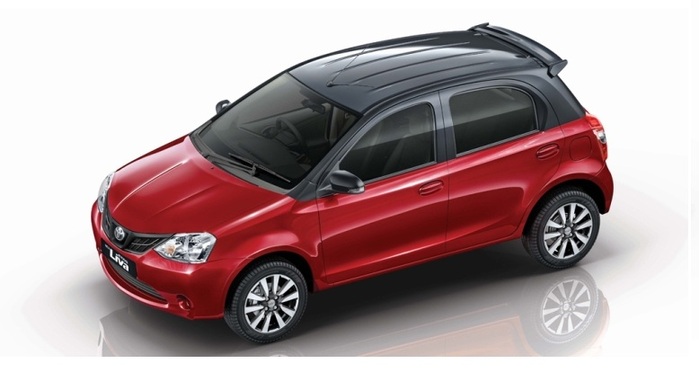
Toyota Kirloskar Motor (TKM) will soon have its one millionth customer in India. That is cause for celebration. TKM is also happy about leading in the segments it operates in the price category of over Rs 10 lakh. But there’s also a concern. The company is unlikely to have a launch of any all-new model for a year or so at least. This has made it to implement new strategies for growth in the high-volume segment. “The Innova is the market leader in its category with about 33 percent share. The Corolla commands about 50 percent market share in its class. In the Camry segment, we are close to 50 percent with the hybrid doing very well. In the last four months, we have been retailing about 100 cars a month.
And the Fortuner SUV has a share of 75 percent in its category,” said N Raja, senior vice-president and director, TKM. However, the challenge for TKM is in the segments below Rs 10 lakh. The company’s presence in the sub-Rs 10 lakh category is marked by the Etios and the Etios Liva models but there is no sign of market leadership in the respective passenger car categories. TKM, therefore, has a clear plan – to focus on consolidating its bond with its customers (dealers and end customers) and proving the worth of its cars. “We want them all (existing customers) to be with us when new products come, even though it is going to happen a little late. We have been working on providing the best experience to our customers,” said Raja. Numbers for the overall PV (passenger vehicle) segment shows it grew by 3.90 percent YoY in FY2014-15.
“That is largely because of new products. But, during the January-September 2015 period, we have grown 13.89 percent (without launching any new model in the high-volume category), which is an achievement because we went for a close interaction with our customers, trying to leverage on our strengths of QDR (quality, durability, reliability). This has helped us,” observed Raja. Not many may have noticed but TKM, during September-October 2014, began providing airbags as a standard feature across all of its models including the Etios and Liva cars. Raja revealed that TKM completed covering all models from its India portfolio under its new safety-driven initiative by January 2015. “So now we are the only manufacturer which provides dual airbags as standard on all models,” he commented.
Evan D'silva Collaborates With Travel Food Services

Travel Food Services was recently acquired as a client by Mobilestyx. The software projects and mobile application development of Travel Food Services will now be undertaken by the team of Mobilestyx under the guidance of Evan D'silva, Head of IT Operations, Mobilestyx Consulting and Solutions.
Travel Food Services (TFS) is amongst India's largest Food and Beverage operators in the domestic travel retail segment. With distinct operational abilities, TFS caters to over 90 million passengers all over travel hubs in not only India but across the globe. Ranging from the tantalising street food to gourmet and fine dining options for cosmopolitan passengers to a few of the best loved international brands – the F&B offerings have really transformed air travel compelling travellers to take pleasure of a never-before F&B experience, while making sure that there is something to suit every pocket and taste.
“We are highly pleased to announce Travel Food Services as our client. It's a pleasure to work with them,” said Evan D'silva.
Source: TT-Games
'There is an incredible correlation between brand value and a company’s market share.'
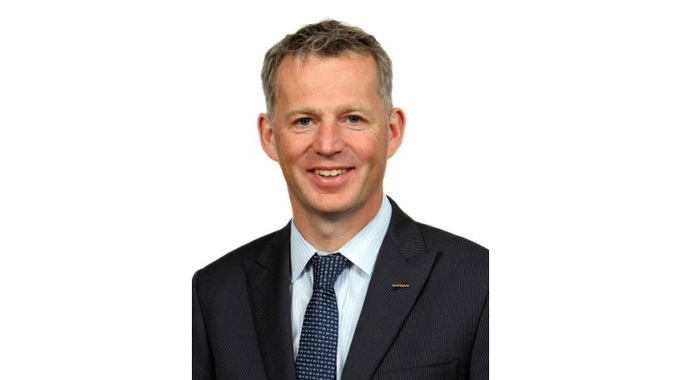
Nissan has recently joined hands with the International Cricket Council to sponsor key tournaments over the next eight years to build brand recall in the Indian subcontinent. Roel De Vries, Global Head - Marketing & Brand Strategy, speaks to Sumantra B Barooah.
What are the key benefits that Nissan expects from this association?
Firstly, if you want to be a successful brand, you need to be part of people’s lives. The type of watch you wear, the type of running shoes you wear, the car you drive is a very big part of who you are. So for us, it is important that Nissan be a part of people’s lives, and here, there’s no better way than with cricket.
We are a young brand in India, and we have ambitions to grow. You don’t grow in a market like India easily. Yes, of course, we introduce our vehicles, we build new factories, open new dealerships. So we are putting in all the groundwork for making quality infrastructure. But in the end, you need to be meaningful to the people of India. So in such a big country, sponsorship is a very useful way to do that. So how this will help us is that it will let people see us, understand what we are all about as a brand, which, only by means of our cars is very difficult.
Can you share any experience with us from your association with UEFA that resulted in expected benefits?
If you see, the Nissan brand’s ranking has gone up significantly. We just grew into being the 49th most valuable brand in the world according to Interbrand. If you go to certain markets, like Europe, we are pretty big. Even in Mexico, we are even bigger. This is because people want to be part of brands which are part of their lives. It is sometimes hard to explain, but that’s what we do as marketing people – to figure out how to connect.
When you see such a sharp rise in brand recall due to such associations, do the sales volumes reflect the changes?
There is an incredible correlation between brand value and a company’s market share. Yes, we have seen a lot of growth in Europe and Mexico due to these partnerships. But you see, brand building is a long-term game. If you introduce a new car, you could have a very quick benefit. But to build a brand, you need a lot of time. This is an eight-year partnership. So if we announce a partnership today, we can’t expect the benefits to come tomorrow. This is a long-term investment in India.
Source: EXECSPIN
Tata Motors reports loss in Q2 as JLR hit by Tianjin blasts

An exceptional loss because of the recent blasts at Tianjin Port weighed on the UK-based luxury carmaker Jaguar Land Rover’s second quarter performance and resulted in a consolidated net loss of Rs 429.76 crore for parent Tata Motors in the quarter. The automaker recognised a loss of 245 million pounds for about 5,800 vehicles involved in the Tianjin Port explosion. Post the exceptional charge, loss before and after tax stood at 157 million pounds and 92 million pounds, respectively (against profit before and after tax of 609 million pounds and 450 million pounds, respectively in the corresponding quarter last year).
“The process for finalizing an insurance claim may take some months to conclude, so insurance and other potential recoveries will only be recognised in the future period when paid or confirmed and have not been recognised in this period,” the company said. The company reported a profit of Rs 3,290.86 crore in the year-ago quarter. Net sales for the quarter rose 1.67% from a year ago to Rs 61,973.82 crore.
“Strong sales in the UK, Europe and North America helped offset weaker sales in China and other emerging markets in the Jaguar Land Rover business” the company said in a statement. On a stand-alone basis, its net loss reduced to Rs 287.47 crore from Rs 1,845.63 crore a year ago. Net sales rose 20.14% from a year ago to Rs 10,401.43 crore.
Maruti's introduces AMT, dual airbags and ABS in Wagon-R and Stingray
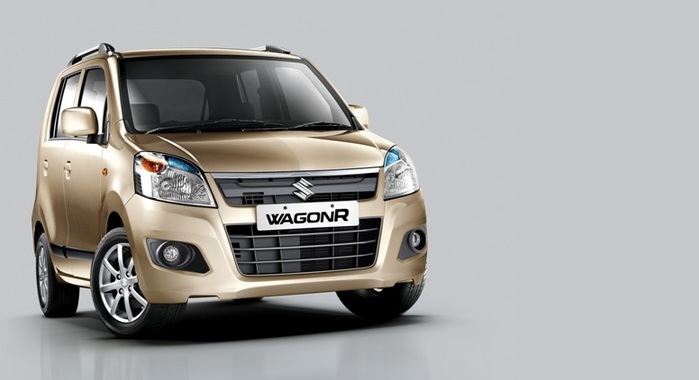
Maruti Suzuki India Limited (MSIL) has announced that it will offer the acclaimed Auto Gear Shift (AGS) technology in the WagonR and Stingray models. The auto gear shift transmission will be available in the VXi variants of both models. In addition, driver and co-driver airbags and Anti-lock Braking System (ABS) will be offered as an option across all variants, including base variants, of WagonR and Stingray.
Introducing the new variants, Mr RS Kalsi, executive director marketing & sales, MSIL said, “WagonR is one of the strongest brands in the Indian car market and it has been one of the top five selling cars in the country. WagonR will be the third brand from our portfolio to get the acclaimed Auto Gear Shift technology. By introducing the AGS in a popular car like WagonR, we aim to democratize the AGS technology so that more customers can enjoy the convenience of automatic gear shift without compromising on fuel efficiency and at an attractive price.”
“The option of dual airbags and anti-lock braking further strengthens the core proposition of WagonR and Stingray as ‘Smart’ cars,” he added. The Auto Gear shift is currently offered in Celerio and Alto K10.
Source: Luxury Car India
Evan D'silva Visits Canadian Office
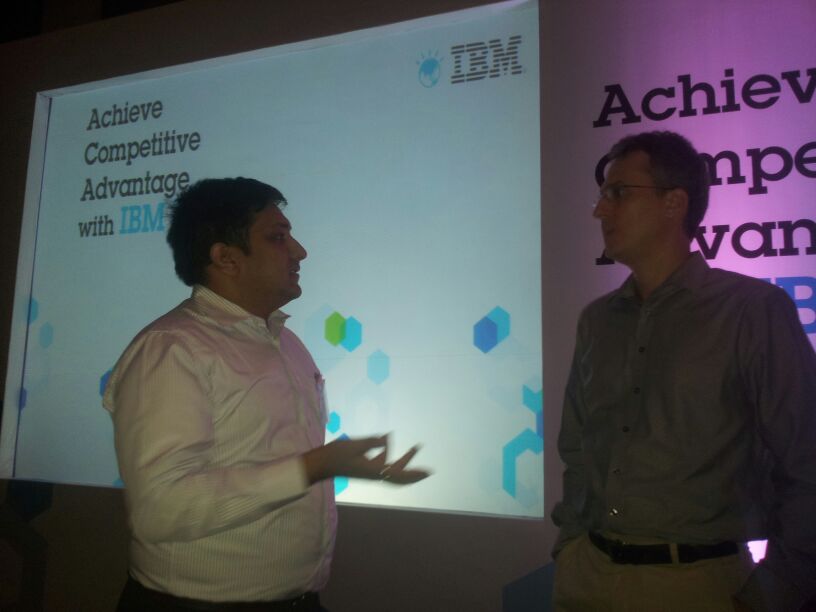
Evan D’silva, Head of IT Operations at Mobilestyx visits the Canadian Office of Mobilestyx Consulting and Solutions to extend a warm welcome to all Canadian companies seeking mobility services. For facilitating the clients' succeed in world's rapidly evolving IT markets, Canada being a sensible choice was selected as a part of company's expansion.
Various applications have been specially designed for the Canadians. One of them is ‘mPolice’. This helps the lay man to be in touch with Canada Police. The app features wanted lists, sex offenders, emergency numbers, local reports, list of missing persons, major cases solved, emergency numbers etc. With these features; it becomes easy for the common people of Canada to connect the Canada police. The app has been greatly useful for the Canadians.
“The motto of Mobilestyx is to ensure that the existing clientals get the support and timely service they require. The office in Canada has been launched for providing all our clients with quality mobility solutions and that is the reason our clients love working with us,”says Evan D’silva.
The other offices of Mobilestyx are in Mumbai, Ontario and Irvine. The company’s corporate sales partners are located in other countries.
Source: Exec Spin
Isuzu Motors sets up Engineering Business unit in India
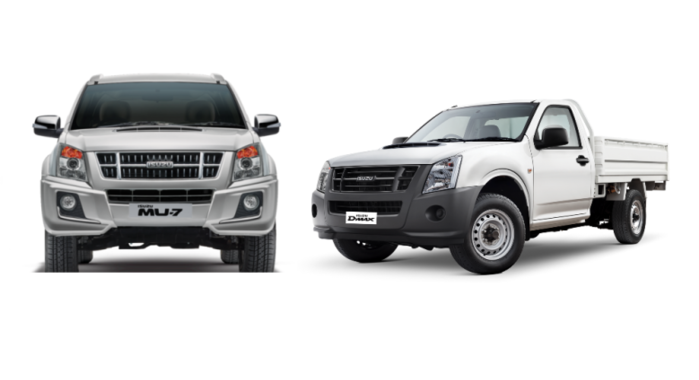
Isuzu Motors Limited, Japan, has incorporated a new company – Isuzu Engineering Business Centre India Private Limited (IEBCI) in India that will be responsible for the company's R&D and sourcing activities. IEBCI will primarily focus on enhancing efficiency and quality levels of Isuzu Motors India’s (IMI) products, enabling the company to achieve 70% localisation at Start of Production (SoP) and 100% localisation in the future. IEBCI will also serve as the specialized hub for sourcing parts for Isuzu’s global operations.
Naohiro Yamaguchi, MD of Isuzu Motors India, will also assume the role of director, IEBCI with immediate effect. Speaking about the new company, Yamaguchi said, “It is part of our continuous effort to offer the Indian customers, products that are driven by “value and quality”. It is indeed a key milestone ISUZU has achieved, since the start of its operations in India in 2012. With the new IMI manufacturing plant to go on stream at SriCity, early next year, IEBCI will allow us to keep tremendous focus on supplier quality, material costs and R&D activities. This will also help both the companies to attain an organic growth by leveraging their strengths, especially, when IMI is at the crucial juncture of its full-fledged operations in India.
IEBCI will ably support the global operations of ISUZU by sourcing parts, thanks to the efficient supplier base that India has over many other countries.” IEBCI will support IMI to achieve 100% localisation and will ensure adherence to stringent quality standards in sourcing parts and components for the company. The formation of IEBCI will also help Isuzu in R&D activities to to cater to the specific need of the Indian customers and also achieve greater efficiency levels in the overall operations of the company in India.
Source: Luxury Car India
Mahindra & Mahindra sells 24,060 PVs in October
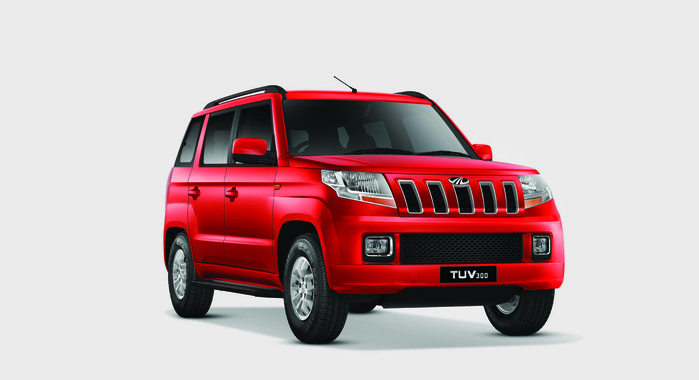
Mahindra & Mahindra’s has announced sales numbers of 51,383 units during October 2015 (October 2014: 42,780 units), representing a growth of 20%. The company’s passenger vehicles division (which includes UVs, cars and vans) sold 24,060 units in October 2015 (October 2014: 42,780 units), a growth of 19% year on year.
The company’s domestic sales stood at 48,815 units during October 2015 (October 2014: 42,780 units), a growth of 21%. Speaking on the auto sales performance for October 2015, Pravin Shah, president and chief executive (Automotive), M&M, said, “The advent of the festive season has provided the much-needed fillip for the auto industry especially on the back of the new launches of most manufacturers which has received an encouraging response. With the drop in interest rates and the fuel prices remaining benign, we expect the industry to maintain a good growth momentum going forward.
At Mahindra, we are happy with our performance during October 2015, which has witnessed a positive growth of 20 percent backed by excellent response garnered from the recently launched TUV300 as well as other brands such as XUV500, Scorpio, Bolero and pickups. We are quite hopeful of this positive growth momentum continuing for the rest of the year.”
Mercedes-Benz sets out to digitalise entire value chain, from design and development to production
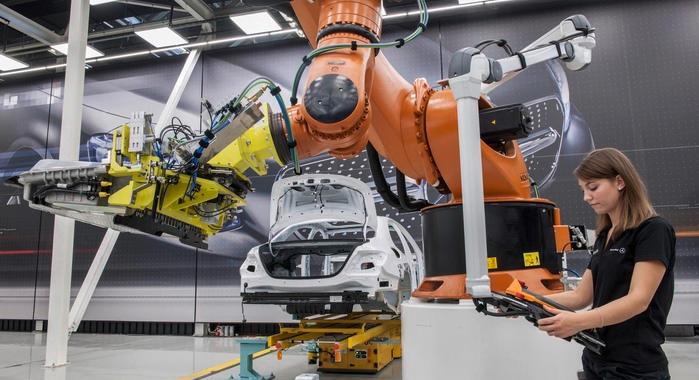
The automobile industry is facing fundamental changes and alongside the electrification of the powertrain and autonomous driving, digitalisation is driving this process of change. This combination of the physical and digital is often referred to as ‘Industrie 4.0’. Mercedes-Benz says it is already networking the entire value chain in real time. "All major trends in the automobile industry are already driven by digitalisation, or are driving it themselves. Our aim is to be the world's leading, most innovative automobile manufacturer when it comes to digital technologies, too," says Dr Dieter Zetsche, chairman of the Board of Management of Daimler AG and Head of Mercedes-Benz Cars. "At Mercedes-Benz, we use the term Industrie 4.0 to describe the digitalisation of the entire value chain, from design and development to production, where the term has its origin, and finally to sales and service," says Markus Schäfer, Member of the Divisional Board Mercedes-Benz Cars, Manufacturing and Supply Chain Management, Daimler AG.
"For us at Daimler, there is no question that the digital revolution will fundamentally change our industry. This applies to the methods by which we develop, plan and produce our vehicles. It applies to the way we make contact with our customers. And not least, it can be experienced through our products themselves." The potential of the digital revolution is huge: If man, machine and industrial processes are intelligently networked, individual products of high quality can be created more rapidly, and production and manufacturing costs can be made competitive. Flexibility is another hallmark of the digital revolution: The worldwide demand for passenger cars, commercial vehicles and mobility concepts is increasing. At the same time, the requirements of customers around the globe are becoming increasing diverse.
While Mercedes-Benz was able to cover most customer requirements with just three basic passenger car models in the 1970s, there are now 10 times as many. At the Sindelfingen plant, for example, it is extremely rare for two identical examples of the S-Class to leave the production lines. There is also an increasingly wide range of drive variants – alongside petrol and diesel engines, hybrid and fully electric drive systems are increasingly popular. What’s more, the innovation cycles are increasingly shorter. Mercedes-Benz says that automobile production will change from large-scale to ‘one-off’ production, where every car is built to individual customer requirements.
Source: TT-Games
Volkswagen suspends former diesel engine boss
Scandal-hit German automobile giant Volkswagen has suspended another senior engineer and head of its largest transmission plant in connection with its investigation into who was responsible for cheating on diesel emissions tests, reported the Wall Street Journal on Thursday. Falko Rudolph, head of VW's factory in Kassel, Germany, has been suspended after being questioned by internal investigators last week, reports said. Rudolph was chief of Volkswagen’s diesel-engine development from 2006 to 2010 and is considered to be the father of the company’s dual-clutch transmission.
Rudolph is the fourth senior engineer to be axed after the automaker started its investigations in the scandal which wiped out nearly a third of the company’s net worth and led to intense pressure on the company. Already Christian Klinger, the VW Group's boss of sales and marketing and aftersales, has left the firm "due to differences with regard to business strategy". VW confirmed Klinger's departure was unrelated to the emissions scandal. Former Skoda boss Winfried Vahland has also left the firm, and won't be taking up his new role as VW's US chief.
Additionally, several VW executives are also reported to be on official leave from the company, with Audi R&D boss Ulrich Hackenberg, VW R&D chief Heinz Jakob Neusser and Porsche board member Wolfgang Hatz all said to be suspended – although this has yet to be confirmed. Meanwhile, Volkswagen chief executive Matthias Müller on Thursday told top managers that changes to the company’s structures and culture announced in the wake of the emissions crisis are to empower regional managers to become more autonomous rather than waiting for headquarters in Wolfsburg to make decisions.
In another significant development, Volkswagen said that it would recall around 8.5 million vehicles affected in the European Union following an order from Germany's KBA automotive watchdog, which is taking the lead for other national EU regulators.
Source: ExecSpin
Evan D'silva pushes the Digital Momentum for Jaguar Land Rover

Mobilestyx Consulting and Solutions has recently introduced the first Jaguar Land Rover maximizer. Evan D'silva, Head of IT Operations at Mobilestyx undertook development of the application. He, along with his dedicated staff of proficients meticulously organized and accomplished the making of JLR maximizer.
The application is basically a sales product maximizer that generates quotations for the customers. It has user friendly interface which is easy to use.
“The JLR maximizer provides customer service users and manages their choice of access to customer data. It instantly compiles, prices, customizes, and prints, faxes, or e-mails your quotation. This is a good way for sales and marketing,” says Evan D’silva.
With the JLR maximizer you can review record history and client interactions. One can as well manage a price-list. Price-list Management system consists the data-reports by item, product type etc. The result of the quotes can be analyzed, reported on by conversion revenue and rates, by location, product line, salesperson and so on.
Evan D’silva is greatly thankful to Mr. Pankaj Sharma, Mr. Raveesh Rastogi and Mr. Pursnani for devoting their valuable time throughout the development of the application. The maximizer can be easily accessed on all major platforms.
Visit at: JLR Maximizer
Source: Luxury Car India
New Indian buyers increasingly considering bigger cars: Study
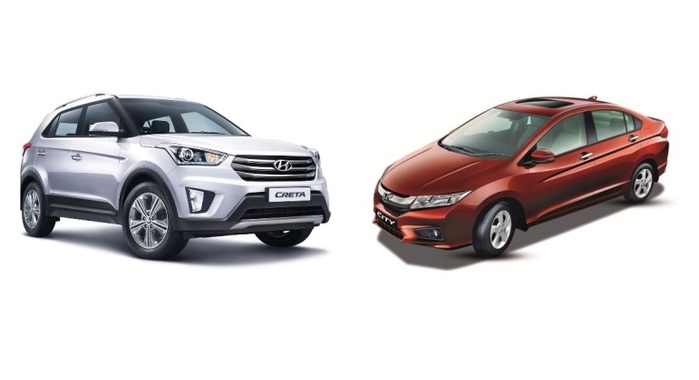
Buyers of new vehicles in India are increasingly looking at models in the utility vehicle and mid-size car segments, according to research firm J D Power Asia-Pacific. “The share of new-vehicle buyers who consider small cars during their shopping process has decreased to 45 percent from 65 percent in 2012. Concurrently, the number of shoppers who consider utility vehicles and midsize cars has increased by 12 percentage points and 7 percentage points, respectively,” said the ‘2015 India Escaped Shopper Study’ by J D Power. The study is based on responses from 8,116 buyers and 2,983 rejecters of new cars and new utility vehicles who purchased their vehicle between September 2014 and April 2015.
“Today, price gaps between vehicle segments have narrowed with many automakers offering models of different body types around the same price point. This has given new-car buyers a wider range of vehicles for consideration, including larger models,” said Mohit Arora, executive director at J D Power. Among other key findings of the study is the fact that Maruti Suzuki remained the most considered brand with nearly 40 percent of buyers opting for at least one model from the company. The study found that the overall customer retention stands at 37 percent in 2015, down slightly from 38 percent in 2014.
Toyota has improved its customer retention rate the most over last year. Another interesting revelation by the study is that price of a vehicle is the key deal breaker for customers in India, followed by exterior design and then fuel efficiency. As per the study, consideration for newly launched models has increased among new vehicle shoppers in India. In 2015, 10 percent of all shoppers considered a newly launched model, the highest in the last three years. Also, repeat vehicle buyers are typically more open than first-time buyers when it comes to selecting a newly launched model, the study says. The study, which examines the reasons why new-vehicle shoppers consider but ultimately reject certain models in flavor of another, was fielded from March through July 2015.
Source: Luxury Car India
Tata Magic drives past the 300,000 sales mark
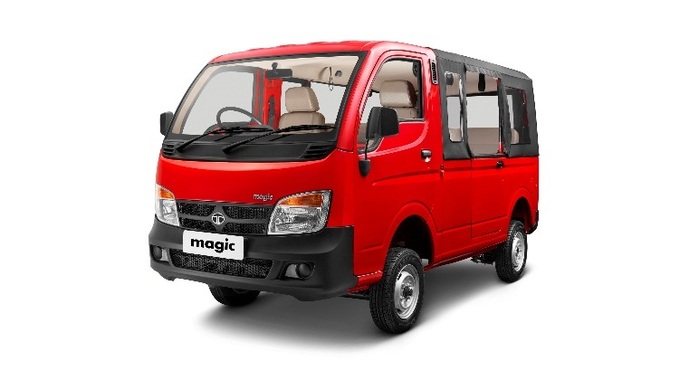
In July this year, Tata Motor’s Ace family of small commercial vehicles (SCVs) achieved the milestone of 1.5 million sales cumulatively. On September 21, in yet another landmark, its public transport vehicle – the Tata Magic – crossed sales of 300,000 units. With the Magic, Tata Motors has been successful in breaking this highly complex structure of the last mile passenger transport vehicle industry with an over 85% market share in this segment.
Magic sales reached the first 100,000 units in three years and the next 200,000 units in five years. According to Tata Motors, the Magic has been lauded by various government stakeholders – district authorities / transport authorities and also the Ministry of Urban Development which has been endorsing it as an ideal vehicle to replace old three-wheelers and uplift the face of last mile public transport in urban and rural markets in India. Ravi Pisharody, executive director, Commercial Vehicle Business Unit, Tata Motors, said: “With the achievement of the 300,000 sales mark of the Tata Magic, we yet again, confidently testify the value and trust we offer to our customers. The Magic’s success is a testimony to our engineering excellence and strong customer orientation. With a market share of over 85%, the Tata Magic has revolutionised the last mile passenger transport segment. We continue to be the dominant player and make huge strides in the small commercial vehicle industry.”
Speaking to Autocar Professonal, R Ramakrishnan, Senior Vice President, Product Strategy& Planning and Customer Value Creating, Commercial Vehicle Business Unit, Tata Motors, said, “The goods carrier segment is easy to understand and operate whereas the passenger vehicle segment is challenging to operate. The reason is that for any passenger vehicle needs a permit to operate and these permits are issued by authorities which makes it more challenging and difficult than goods vehicles.”
Mercedes-Benz reveals Concept IAA at Frankfurt show
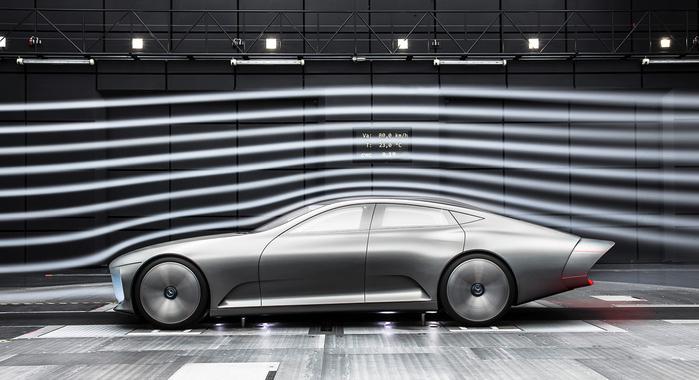
Mercedes-Benz has previewed a series of active aerodynamic developments and a svelte new styling treatment with a futuristic concept revealed on the eve of the Frankfurt Motor Show. The car also shows the frugal petrol-electric plug-in hybrid powertrain technology and contemporary touch-based interior controls the company plans to use on future road cars. Called the Intelligent Aerodynamic Automobile (IAA), the four-door saloon features an extendable body that provides it with a drag coefficient of just 0.19 in its most efficient ‘long tail’ form. The dimensions and silhouette are said to preview those of the third-generation CLS, due out in 2017. The IAA automatically switches from ‘design’ mode to aerodynamic mode when it reaches 80kph, with elements in the tail section extending to increase overall length by 390mm.
At the same time, flaps in the front bumper and louvres in the grille are deployed to improve airflow around the wheel arches and underneath the car. The new exterior styling is set to filter down into future road cars. Mercedes-Benz sales and marketing boss Ola Källenius said: “It shows in a host of details what our customers can look forward to in future production models.” At 5040mm in length in design mode, the IAA concept is 100mm longer than today’s CLS. In aerodynamic mode; with its body fully extended, it stretches to 5430mm, 185mm longer than the long-wheelbase S-Class. Width and height are 1995mm and 1305mm respectively. The 2975mm wheelbase is 100mm longer than that of today’s E-Class and CLS, hinting at a larger interior in the next generation of both models. The concept rides on the latest evolution of Mercedes’ MRA platform.
Power is provided by the petrol-electric plug-in hybrid system used in the C350e Plug-in Hybrid. It pairs a 208bhp turbocharged 2.0-litre four-cylinder petrol engine with an 80bhp electric motor to provide a total output of 275bhp and 442lb ft. Mercedes is yet to provide any performance claims, although computer simulations suggest that the new concept is capable of delivering an electric-only range of up to 41 miles and combined fuel economy of 191.6mpg. The lavish interior of the IAA closely previews that of the upcoming new E-Class. Building on the design used by the latest S-Class, it features a long, horizontally mounted high-definition monitor, as well as a centre console with touch-sensitive controls.
All-new Volvo XC90 gets 266 pre-orders in India
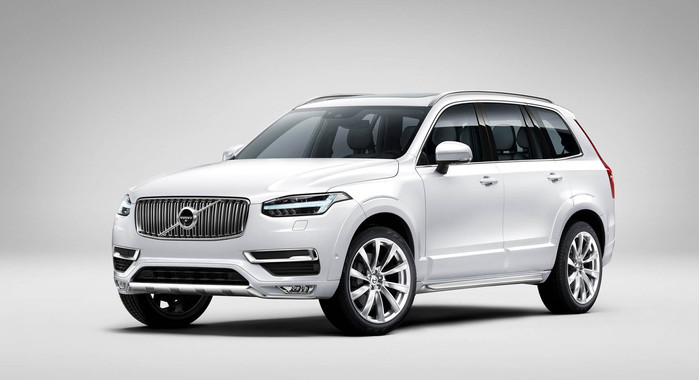
Within two months of its unveiling in India, the all-new Volvo XC90 has received 266 pre-orders. This, according to the carmaker, is a clear statement of the interest for the first new model based on Volvo’s in-house developed Scalable Product Architecture (SPA). First deliveries of the all-new XC90 to customers will start later this month. Tom von Bonsdorff, managing director, Volvo Auto India, said,"We already have a positive momentum before we start deliveries of the new XC90. So we are on track for another good year at Volvo Cars. The XC90 paves the way for a portfolio of exciting new cars to come in the following years.”
Globally over 57,000 orders have already been registered. The Torslanda plant in Gothenburg, Sweden has just started up a third production shift to meet customer demand for the new XC90. Globally, 76 percent of customers are choosing the top end Inscription model. Volvo Cars currently markets products through its dealerships in South Delhi, West Delhi, Gurgaon, Ahmedabad, Surat, Mumbai, Chandigarh, Coimbatore, Hyderabad, Chennai, Bangalore, Kochi, Vishakhapatnam, Pune and Kolkata.
Survey in UK reveals reasons for stress and arguments in cars
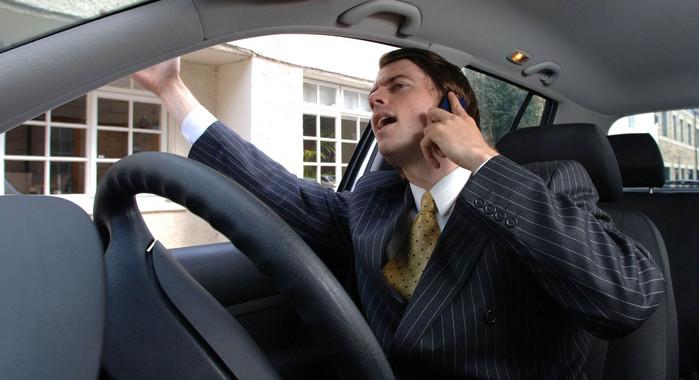
Around 14 million cars take to UK roads during a bank holiday, causing traffic mayhem and providing the perfect catalyst for in-car arguments. Harman, the audio and infotainment company, recently conducted an online survey to cite the biggest causes of bust-ups with fellow passengers while on the road and the results include everything from humorous to surprising.
‘Getting lost’ has been named as the main cause of arguments on car journeys with a third of UK respondents (33%) voting this as the biggest reason of arguments on the road. The poll’s results further listed bad driving habits such as sharp braking and speeding as the second biggest cause (22%), while the length of the journey was third (13%), closely followed by music choice (12%) as the fourth greatest cause of bickering while behind the wheel.
“These results show just how stressful car journeys can be. However, many of the argument inciters identified in the poll can be helped with the latest in-car technology, driver aids and a good infotainment system,” said Matt Fisch, VP, Global Engineering Audio SBU, Lifestyle Audio Division from Harman. “State-of-the-art satellite navigation systems can help motorists find their destination and reach it quickly and more efficiently with the incorporation of real-time traffic updates.
Clever driver aids can help improve some bad driving habits, while the length of journey is all about perception. If the journey is made enjoyable through the right in-car systems then the perceived length of the journey is much shorter. The benefits of these infotainment systems are only going to improve as our lives and cars become more connected.”
Renault Nissan to rationalise production at Chennai plant, reduce manpower
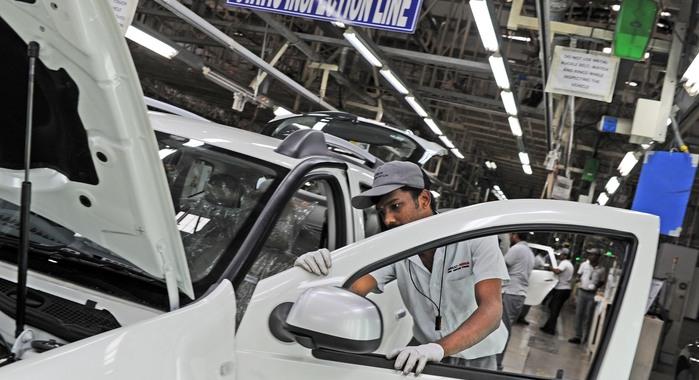
Faced with a slowdown in sales, Renault Nissan Automotive India is looking to rationalise production at its Oragadam, Chennai plant. It is understood that the company plans to reduce output to cut rising product inventory levels both at the plant as well as dealerships across the country. This exercise may also see the company reduce manpower – mainly contract workers and trainees – at the plant.
Media reports suggest more than 1,000 employees comprising contract workers, apprentices and trainees could lose their jobs. In an emailed response to Autocar Professional, a company spokesperson said, “India is a dynamic market. To adapt to the volatile business environment and consistent to our strategy, Renault-Nissan is continuously adapting to market needs to optimise manufacturing operations.” “Renault-Nissan has made a significant investment in India to establish a world-class manufacturing plant with 400,000 unit capacity. The plant caters to Nissan, Datsun and Renault brands for both domestic and export requirements.”
Renault and Nissan have jointly invested US 1.1 billion in the manufacturing facility at Oragadam, which currently employees more than 7,000-8,000 people. While Renault currently sells the Duster and Koleos SUVs, Fluence sedan, and Lodgy MPV, Nissan retails the Micra hatchback, Sunny sedan and the Terrano SUV. The Datsun brand in India comprises of the Go hatchback and Go+ MPV. In the last fiscal (2014-15), Renault India sold 43,384 units, down 24.38% year on year and Nissan Motor India sold 47,474 units, up 24.85%. In the first four months of the current fiscal (April-July 2015), Renault India has sold 13,628 units, down 4.53% YoY (2013-14: 14,275), and Nissan Motor India has sold 14,138 units, down 19.65% YoY (April-July 2014: 17,595). In terms of market share, Renault India has a 1.61 percent share and Nissan Motor India 1.56% at present.
Meanwhile, Renault is set to launch the Kwid compact car this festive season, a model which is likely to be a game-changer in the market and could give a fillip to the company’s fortunes.
Sajid Yacoob attends London School of Economics Management Seminar

The London School of Economics is one of the leading social science universities in the world. The Executive Negotiation and Decision Making course was a 5 day program (29 June - 3 July 2015) conducted by London School of Economics. The course was designed to equip delegates with the knowledge, practical skills and research evidence important to conduct efficient negotiations. It combined conceptual learning with a range of practical simulations and exercises to facilitate participants as well.
The course helped to develop a personal development plan ensuring constant improvement as negotiators. It made the participants master essential tips and concepts gained from negotiation study. The discussion enabled them to understand the psychological, strategic and interpersonal aspects of negotiation. At the end of the session each one of them had complete knowledge of the specificities of various negotiation scenarios, from two-party transactional negotiations to multi-party, multi-issue negotiations.
London School of Economics offered a chance to all to complete a personal development plan at the end of the course and receive personalised feedback from the instructors. In the development plan, participants summarised their strengths and weaknesses as a negotiator and, most importantly, created an action plan to continue improving their skills. The instructors carefully analysed each development plan and provided feedback and guidance to the individual participants.
At the end of the programme Sajid Yacoob, Commercial Director of JLR discussed his experience at Executive Summer School. “London School of Economics offered a complete understanding of negotiations, and its application to the individuals as well as to the organisation. It provided a step-by-step procedure to setting up a social enterprise, thus adding value to company, community and country. An amazingly distinguished executive programme!”
All Indian carmakers to have navigation-based systems by 2018: NNG
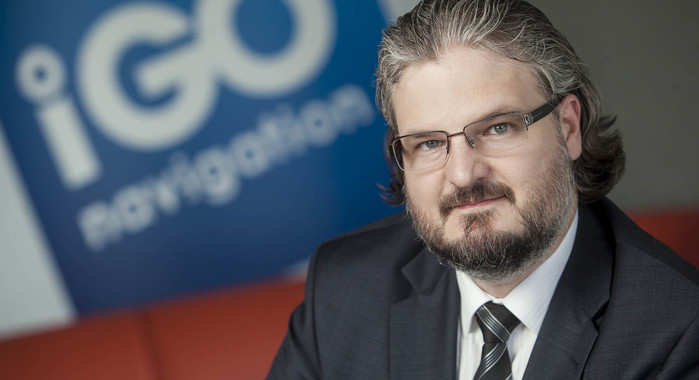
As technology makes inroads across the spectrum into the country and Indian vehicle manufacturers embrace the requirement of a holistic in-cabin experience, the need for navigation-based connected systems in Indian cars is increasing. According to Peter Bolesza, vice-president, Emerging Markets at the Hungary-based NNG, which develops infotainment and navigation software for the global automotive market, by 2018 all Indian carmakers could implement these systems in their cars in some form or another.
Speaking to Autocar Professional at a media round table in Mumbai, Bolesza said: “At the moment, around 8 to 9 OEMs in India are using navigation-based products in some form or another in their cars as an approved product. We believe that by 2018, 100 percent of the OEMs in India will have navigation in their cars in some form, and I’m talking about approved accessories. The next three years will all be about this – it may not necessarily be a line fit, but they will have dealer-approved products for sure.” NNG, which is known for being a one-stop provider of navigation systems worldwide, is hopeful of riding this wave and plans to bag contracts from 5 or 6 carmakers in India by 2017.
"We are mostly present in the aftermarket at the moment. We have one OEM partnership in India and are really close to entering into partnerships with two more next year and another two a year later. So by 2017, we will have 5 to 6 OEM clients in here, which is a good number considering there are a total 16 OEMs in India,” Bolesza said.
The Hungary-based automotive navigation provider realised a growth of 25 percent YoY in its India operations, and forecasts a 40 percent increase in revenues for India in calendar year ending December 2015. This is in line with the expected growth of the automotive sector in India.
Toyota Kirloskar Motor first OEM in India to facilitate online purchase of genuine spare parts
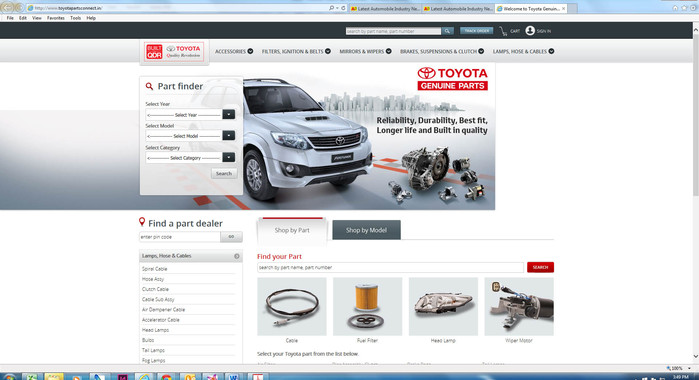
Toyota Kirloskar Motor (TKM) has launched an online portal www.toyotapartsconnect.in to facilitate the distribution of its genuine spare parts and genuine accessories to the retail market. Varied and extensive search options along with multiple check points make finding the right spare part an easy affair along with selecting the nearest Toyota authorised dealer/distributor for delivery of spare parts or accessories.
A basic parts fitment instruction manual for key parts is also provided. TKM says Toyota’s core competency of lean inventory management and Just in Time have been adopted to cater to customers. The company currently supplies spare parts twice a day to all the metro cities with an efficient supply system and logistics network. Toyota claims it is one of the best in the industry with around 98.5 percent supply rate of spare parts. Initially around 400 Toyota genuine spare parts such as brake pads, clutch plates, wiper blades, oil filters, air filters in addition to around 30 Toyota genuine accessories will be sold through the online channel by the parts distributors. In the first phase of launch, this service will be available in Bangalore and later will be expanded to other cities.
Commenting on the announcement, Shekar Viswanathan, vice-chairman and whole-time director, TKM, said: “We are very keen to spearhead this unique initiative of launching the digital platform for our customers, which is a first of its kind in the industry. Indian digital commerce is growing at a fast pace with the rapid penetration of internet access and increasing shift to smartphones, tablets and laptops. Toyota strongly believes in bringing newness to its products and services continuously incorporating customer feedback and addressing the changing customer requirements. In the first phase, customers across Bangalore will now be able to shop for all their Toyota car and care needs with ease and convenience of the digital platform. We will be expanding this to the other cities in due course.”
Ratan Tata inducted into 2015 Automotive Hall Of Fame
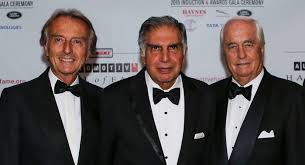
Ratan Tata, chairman Emeritus, Tata Sons, and the visionary for the Tata Motors-owned Jaguar Land Rover's revival, gets recognized for "making a vision a reality," by being inducted into the reputable 2015 Automotive Hall of Fame.
"This is a great honour, and a very humbling one for me, to be inducted into the Automotive Hall of Fame. Nothing has equaled the excitement, the reward and the exhilaration that the car industry has provided. I owe this award to my colleagues in our companies who have transformed the business," said Mr Ratan Tata in receiving the award.
Ratan Tata acquired Jaguar Land Rover from Ford in 2008. Last year was the fifth successive year of growth for Jaguar Land Rover. Tata's investments in Jaguar Land Rover saved or created over 33,000 jobs in England.
The audience of more than 450 automotive industry execs and media acknowledged Mr Tata's exceptional accomplishments, that included growing the Tata Group during his 21-year tenure as chairman to include 96 companies in 56 countries with over 500,000 personnels, and revenues of above $100 billion previous year.
"This growth resulted from Mr Tata's vision of creating India's largest multinational company, through strategic acquisition and concentration in categories where Tata could dominate, of which automotive was key," said Automotive Hall of Fame chairman Michael Martini in his introduction to Mr Tata.
"Tata's investments in Jaguar Land Rover saved or created over 33,000 jobs in England, while preserving the rich tradition of performance and style that are the signature of these marques. Clearly his vision is the reality," Mr Martini added.
Luca Di Montezemolo acknowledged Mr. Tata's automotive accomplishments in his speech. "It is an honour to share this award with a fantastic friend of mine, Ratan Tata. He is the person who created Tata Motors, built cars in India and has done a fantastic job with Jaguar Land Rover."
Sajid Yacoob, Vice President of JLR India and Commercial Director of Jaguar Land Rover also recognised Mr Tata's success. “It was Mr Ratan Tata's firm, steadfast vision for the two brands Jaguar and Land Rover that has led to the company's incredible turnover. This is an astounding achievement”
Since Mr Tata acquired the business from Ford in 2008, Jaguar Land Rover has doubled in sales and employment, more than tripled its turnover, and invested £10 billion in new product creation and capital expenditure. Last year was the fifth successive year of solid growth for Jaguar Land Rover, enabling us to invest in our long-term future.
Since its founding in 1939, the Automotive Hall of Fame has awarded close to 800 automotive industry greats at its annual events, inducting just 350 to the Automotive Hall of Fame in Dearborn, Michigan. They include Ettore Buggati, Henry Ford, Ferdinand Piëch, Sergio Pininfarina, Ferdinand Porsche, and Karl Benz among others.
MARUTI SUZUKI BETS ON XA ALPHA TO UP ITS GAME IN UV SEGMENT
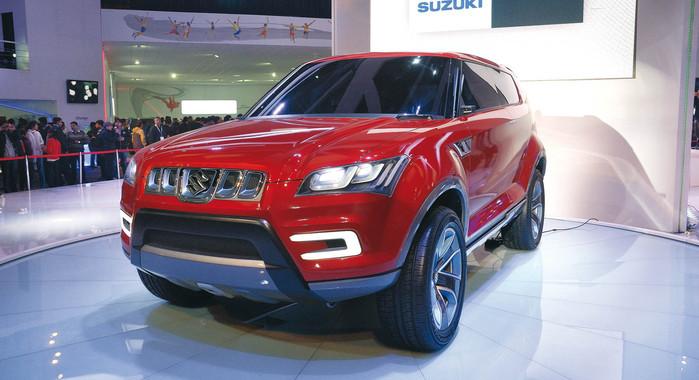
Maruti Suzuki, which launched its all-new S-Cross crossover on August 5, has reported in its Annual Report 2014-15, released on August 7, that fiscal year 2015-16 will see the company launch a slew of new models. Chairman RC Bhargava, in his message to the company’s shareholders in the 2014-15 Annual Report, has been quoted as saying: “Soon, we will also introduce the Compact SUV, the concept of which was presented as XA-Alpha. This will help us cater to an emerging class of customers who prefer SUV appeal while staying compact.”
The XA Alpha was showcased at the Auto Expo 2012 in New Delhi. The compact SUV would help the company meet the requirements of an emerging class of customers who prefer SUV appeal while retaining their preference for a compact car. It is understood that Suzuki Japan and Maruti Suzuki engineers have been jointly working on new model development. Maruti is also working with Suzuki Japan on hybrid and electric vehicle technology and will bring it into commercial production in India at an appropriate time.
In 2014-15, the company’s market share rose by almost 3 percent to reach 45 percent of the total passenger vehicle market in India. “We will attach more focus on exports than what we have done in the past. We will have to plan for launching global products to serve the advanced markets and expanding our network in the emerging markets,” Bhargava added.
MARUTI SUZUKI TO ACCELERATE DRIVER TRAINING PROGRAMME
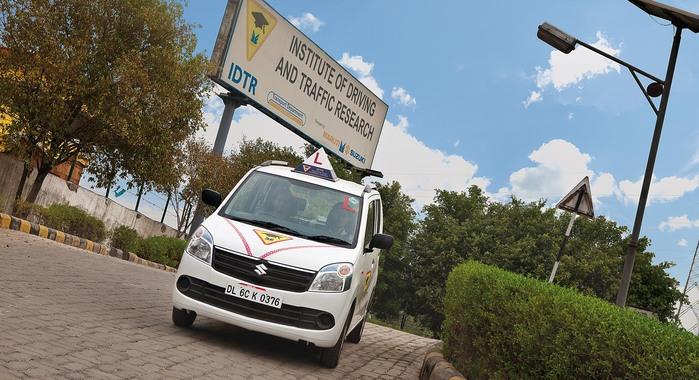
Magan Kanwar is a school teacher in Sirsa, Haryana and rides a scooter. Although she has a car parked at home, she prefers not to drive as she lacks the confidence to manoeuvre it in daily bumper-to-bumper traffic. In October 2011, Kanwar undergoes a transformation in mindset after training at the Maruti Driving School (MDS). Many simulator driving classes later, with her fears dispelled, she is strategising plans to buy a new car and also spreading the word among colleagues. Kanwar’s case can be cited as one of the multiple success stories emerging from MDS about how a diffident learner has evolved into a proficient and safe driver.
Maruti Suzuki has, over 15 years, trained 2.5 million people in safe driving practices. At the time, the then Delhi chief minister Shiela Dikshit asked the carmaker to take over the government motor driver training school, spread across 15 acres in Wazirabad Road, Delhi, under a private public partnership. Maruti then sent a team of people to study western markets and based on their learnings, set up a driving training institute replete with an in-house driving track designed on tracks prevalent in developed countries to recreate a real-life scenario in line with international standards.
This was around the time when a school bus with children had toppled into the Yamuna river. The Supreme Court had stepped in and mandated that hereafter commercial drivers had to undergo driving training.
TRAINING ‘EM THE PROFESSIONAL WAY
In the year 2000, the Maruti Suzuki and Delhi government initiative resurrected the Institute of Driving & Traffic Research (IDTR) that would go on to set a benchmark in professional driver training and lay down the ground rules for safe driving. The institute today imparts training for driving a gamut of vehicles ranging from cars, trucks, buses, taxis to three-wheelers.
A meeting with Mahesh Rajoria, general manager, Driving Training and Loyalty Programme, Maruti Suzuki India, on a visit to the Sarai Kale Khan IDTR in Delhi revealed the day to day activities at the Institute. Two types of training are provided: Under long term, a driver is trained to drive a vehicle in the right manner. The second imparts training to existing drivers who are unaware of the nuances of the rules of the road. This short-term training ranges between half-a-day and three days and involves theory lessons in understanding road and traffic rules and in tackling problems. If a driver opts to upgrade his licence category from a car to CV, HCV, LCV or even an autorickshaw, 15 hours of practicals and 15 hours of theory are mandated to procure a commercial license. “We are basically into driver training but the institute also trains the trainers of the driving schools since our objective is to introduce quality training in driving schools,” says Rajoria.
The IDTR functions as a large format driving school with the capital expenses and land contributed by the government. Under an MoU with the state government, Maruti had initially established a not for profit society to manage the institute constituting professionals drawn from the company as well as from the government. Fees for driving courses sustain the institute in terms of maintenance, fuel consumption and amenities for trainees. Course fees vary from Rs 4,000 in north India and Rs 6,000-7,000 in the South where demand hikes up the rates.
Maruti has also collaborated with its large dealer network to set up small Maruti Driving Schools. Similar to local driving schools, they differ in their high technology content. For instance, multimedia and use of simulators for imparting driving lessons are the norm. At present, the carmaker has 340 driving schools across India and trains almost 125,000 learners annually. This is in addition to the 300,000 drivers trained by IDTRs.
Overall, Maruti manages six IDTRs – two each in Delhi and Haryana, and one each in Gujarat and Dehradun. Among other IDTRs, a few are run by CV manufacturer Ashok Leyland and a couple by Eicher Motors.
An interesting aspect is that while existing drivers also attend classes in IDTRs, only voluntary learners attend classes in the driving school of which 50 percent constitute women. Commercial drivers are sanctioned licenses by the State Transport Departments only after they are tested successfully by the IDTR to ensure they are able to meet the needs of safe driving. Many a time the transport department recommends free licence renewals if the candidate is certified by the driving institute.
A third category of learners comprises corporate-sponsored drivers with a fourth segment’s training entirely funded by Maruti through its Corporate Social Responsibility. Under this initiative, the company selects poor and underprivileged youth and trains them in driving for 5-6 weeks. All drivers are certified after completion of the course and this is recognised by the transport department while approving licenses, whether learner or permanent.
‘THE NEXT PHASE COULD BE LOCAL MANUFACTURING OF PARTS.’
I understand think there were 2-3 other companies pitching for the same business. Did Force Motors’ prior experience of dealing with German brands (Mercedes-Benz, MAN) help you choose it over others?
Absolutely. It’s very important when we are in markets like India that we have competent partners who have already experience of working together with a premium car manufacturer. For us it is very important, in this case, the engine assembly that the supplier is capable of understanding the premium aspect of our cars and also understands the tough quality standards which we have. Of course, it helps a lot if a supplier already has worked together with a premium car manufacturer.
This is the first key step towards in BMW’s localisation strategy, but components that go into the engine are still imported. Are you looking to localise the engine also at a later stage?
We are doing this localisation in phases. We follow this strategy worldwide and it helps us to ramp up in a proper way in terms of quality, timing and costs. This was now a phase one of the localisation where we do mainly the assembly process. As you know, we have localised assembly processes of seats, wiring harness, exhaust and HVAC systems, among other parts. The next logical step would be to localise assembly processes of other components. The next phase could be that we even look into localising the manufacturing of the parts itself. Of course, we have to safeguard the quality, timing and the cost. Therefore, this step has to be undertaken very thoroughly and thought through. Of course, this will be determined by (sales) volumes.
What is the kind of volume that would make it viable to go to the next level?
The premium car market size here now is about 30,000-35,000 units a year. We share this premium car market share with our main competitors and that means if you share it, all of us have 10,000 units a year. These volumes are not good enough to have local manufacturing. Generally, we do full manufacturing plants from a volume starting from 30,000 units a year because if you divide the sales volume of 10,000 units or below a year by multiple models – 8 in our case – the volume per model is not valid to go into manufacturing.
We have to prepare ourselves and have to make BMW as flexible as possible in such a market. This is a task to become as flexible as possible in terms of upgrading the whole business very quickly.
BMW made a big splash with the localisation with Sachin Tendulkar. Has it also impacted BMW’s market performance and customer perception?
The reception to the BMW brand was always good. Customers give us very positive response in terms of the quality and customer satisfaction, and also with our dealerships. But this got another spark with the Sachin event and the big media response. It was tremendous! I would say it was the biggest media event we had so far. Of course, it set off a new wave for BMW.
What is the duration of the contract with Force Motors?
Force Motors is a regular supplier to us in India now. There is no limitation on the contract. As you know, Force has set up a whole facility in Chennai near our plant so there is also a big investment behind it and we are looking to a really strong and long partnership with Force Motors.
As the market expands, will you introduce more models and more engine options?
Yes, we have already asked Force Motors and it has catered for that. The plot is big enough to enable expansion in the facility very quickly and also in the plot that is available for further expansion.
Given the projection and the market scenario, what kind of capacity would you like to have for the engines as well?
Right now the assembly plant here in Chennai has a potential capacity of about 14,000 vehicles per year. This capacity is given in the Force plant as well without any extension. It is difficult to project volumes for the Indian market, but it is expected that the premium car market will double every three years. This means that the market is projected to go up to 70,000 units in the next three years.
Is BMW India also going to grow in tandem with that?
We can only hope. BMW has a long-term commitment in the Indian market and I can only tell you that we are ready for it. We have the flexibility, the people and we have the will to participate.
If you want to have the hybrid engine powertrain for any of the models, will Force Motors be the base for assembling those as well?
This is not a given. No. Now if we went to hybrid engines, first of all it has to be in a certain volume as well that we do it locally.
Is this the first example of BMW outsourcing the powertrain assembly business anywhere in the world?
Yes, as far as I know, it is the first external done engine assembly. Right now all our engine assemblies are done in our own plants.
Any plan of exporting engines assembled in India?
No. It is not planned right now as we don’t export cars from India. I would not exclude this opportunity but right now it is not our plan.
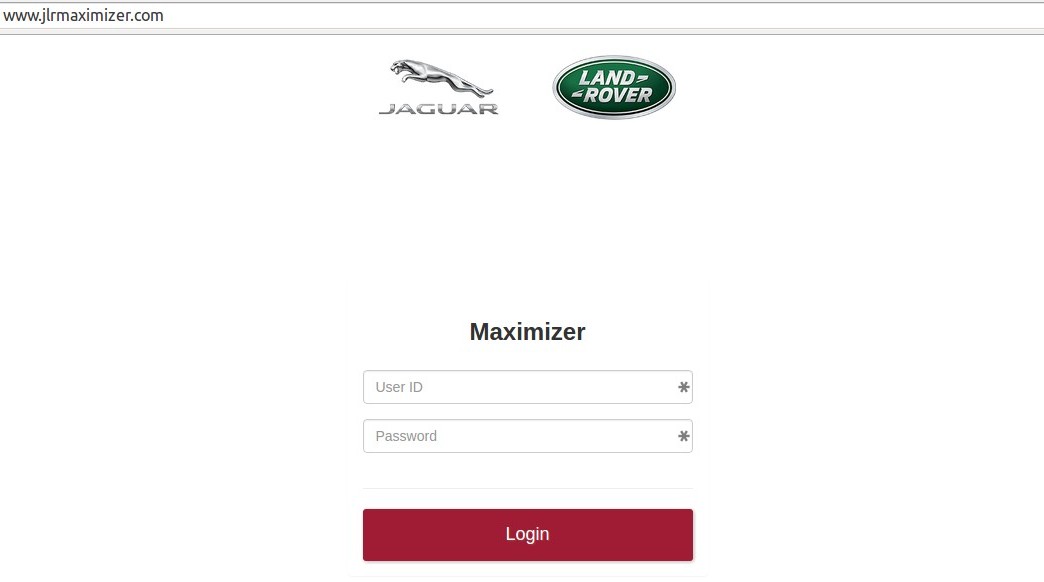
Mobilestyx Consulting and Solutions has recently introduced the first Jaguar Land Rover India mobile application. The development of the app had been meticulously organized and accomplished by our dedicated staff of proficients at Mobilestyx Consulting and Solutions.
The application is basically a sales product maximizer that generates quotations for the customers. It has user friendly interface which is easy to use.
Evan D’silva, Head of IT Operations, Mobilestyx Consulting and Solutions says, “The JLR maximizer provides customer service users and manages their choice of access to customer data. It instantly compiles, prices, customizes, and prints, faxes, or e-mails your quotation. This is a good way for sales and marketing.”
With JLR maximizer you can review record history and client interactions. One can as well manage a price-list. Price-list Management system consists the data-reports by item, product type etc. The result of the quotes can be analyzed, reported on by conversion revenue and rates, by location, product line, salesperson and so on.
Mobilestyx Consulting and Solutions is greatly thankful to Mr. Pankaj Sharma, Mr. Raveesh Rastogi and Mr. Pursnani for devoting their valuable time throughout the development of the application. The maximizer can be easily accessed on all major platforms.
Visit at: http://www.jlrmaximizer.com/
Quality boost for bigger next-generation Nissan Micra
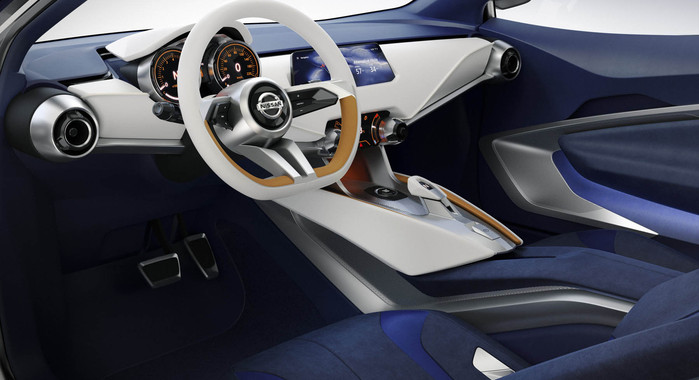
The next generation of the Nissan Micra will aim to win back customers with much-improved interior quality, according to the firm’s executive vice-president, Trevor Mann. The current Micra has suffered because of poor perceived quality. However, Mann believes its successor – due next year and based heavily on the Nissan Sway concept (pictured above) from this year’s Geneva Motor Show – will be more worthy of the Micra name. Although he said production of the car could, in theory, return to Nissan’s UK plant in Sunderland, he defended its current base in India. Nissan manufactures the Micra at its Oragadam plant in Chennai.
“I don’t think you can blame India for the perception of quality,” he said. “You’ve got to blame the people who defined the product. The Micra’s not like that because it’s made in India. We have listened to feedback and I think you will see a big difference [in the next one]. “As for Sunderland, it was always a plant that was designed to be flexible.
And it can make Micra. The debate is whether it can make it and make sense.” Mann also said the Micra is likely to grow for its next incarnation – and this could open up room for a new, smaller Nissan city car. “It’s always a possibility,” he said, “but I think if you look at that segment, there are still not huge volumes in Europe. It’s something that we will continue to study to see if there are opportunities.”
Toyota launches all-new Fortuner in Thailand and Australia
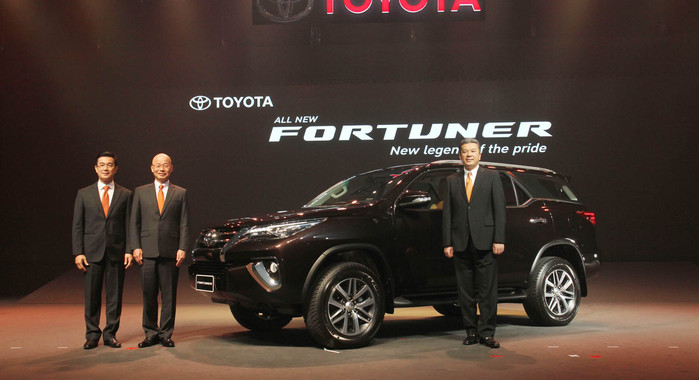
Toyota held the global launch of its fully redesigned, second-generation Fortuner seven-seater SUV at simultaneous events in Bangkok, Thailand and Sydney, Australia, on July 17. When the Toyota Hilux-based Fortuner model was born in 2005, it was aimed principally at markets in Asia, where Toyota saw emerging demand for an affordable yet sturdy family vehicle with proven off-road capabilities. Global sales have grown from 50,000 in the first year to around 150,000 a year, and the vehicle’s target markets have broadened beyond Asia to the Middle East and several other regions, including—for the first time — Australia, where the all-new Fortuner will go on sale in late October. Sales began in Thailand on July 17. Launched in India in July 2009, the Fortuner has until now sold over 83,000 units, including 17,668 units in FY2014-15. Expect Toyota to display the new Fortuner at Auto Expo 2016 next February.
On the outside, the all-new Fortuner debuts a compelling design with a strong identity. The large, slanted upper grille is framed by thick chrome plating that extends around the sleek, aggressive headlamps, while the prominent trapezoidal front bumper creates a sense of depth. Along the side, a bold character line runs across the doors between the flared front and rear fenders, while the C-pillar has been blacked out to produce a ‘floating roof’ effect for a dynamically striking look even when the vehicle is stationary. But though the new Fortuner looks much sleeker, it's still a traditional body-on-frame SUV under the skin. While the front suspension is similar to the new Hilux pick-up (available internationally), the Fortuner gets a more passenger-friendly five-link coil-spring rear suspension layout. Unlike the earlier Fortuner that was full-time four-wheel-drive, the current car gets a part-time system.
The new Fortuner will be available in 2WD and 4WD variants with shift-on-the-fly tech. It will also come with a rear differential lock on some variants and hill descent control as well. The other big change on the next-gen Fortuner will be Toyota’s new GD series engines. They comprise two diesels – a 2.4-litre turbo-diesel, expected to replace the current 2.5-litre diesel unit, and a 2.8-litre motor that will replace the current 3.0-litre unit. The new 2.4-litre 2GD-FTV motor is rated at 148bhp and 40.78kgm of torque while the larger 2.8-litre 1GD-FTV is rated at 175bhp and 45.9kgm of torque. Transmission choices will include a six-speed manual or a six-speed automatic, depending on the variant. The Toyota Fortuner for international markets will come with features such as a rear-view camera, seven airbags, hill descent control, rear AC vents, large touchscreen, 17-inch wheels, disc brakes front and rear and a cooled glove box. Higher variants are likely to come with rear parking sensors, keyless smart entry and start, downhill assist control, bi-LED headlamps and LED DRLs, a powered tailgate and 18-inch alloys with highway tyres. The new Toyota Fortuner will compete with the likes of the new Ford Endeavour and the Mitsubishi Pajero Sport globally. Toyota Australia’s executive director of sales and marketing, Tony Cramb, praised the new balance struck by the second-generation Fortuner: “The unique design suits the advanced tastes of modern SUV buyers while being equipped with a comprehensive list of features appreciated by families and business owners." Commenting on Toyota’s development philosophy for the vehicle, the Fortuner’s executive chief engineer, Hiroki Nakajima, said: “Our concept was to build a true SUV that has style and confidence. The all-new Fortuner is the outcome of our continuous efforts to redefine toughness.”
Mercedes-Benz records its best-ever half-year sales (+14.7%) yet
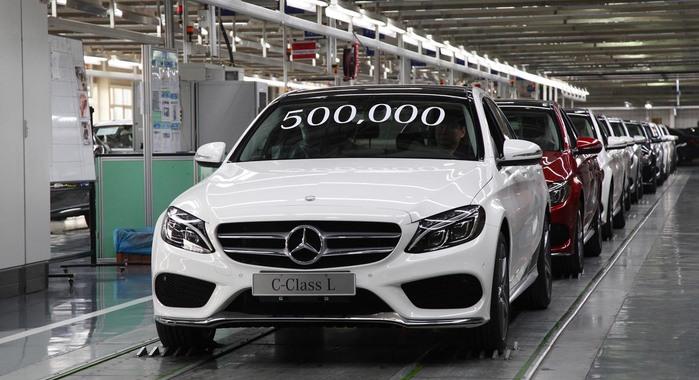
With 898,425 vehicles sold in the first six months of 2015 (+14.7%), Mercedes-Benz has recorded the highest half-year sales figures in the company’s history. The second quarter of the year also exceeded all previous quarters in terms of sales figures. In June, the company sold 169,616 vehicles (+19.3%). The sales success is due to the high demand for SUVs and the C-class saloon and estate. “June saw Mercedes-Benz complete not only the best ever first half of the year in terms of sales, but with 38.5% growth, we have also recorded the strongest sales month in China,” says Ola Källenius, member of the Board of Management of Daimler AG, responsible for Mercedes-Benz Cars Marketing & Sales. In Europe, Mercedes-Benz set new sales records both for June and for the first half of the year. In the first six months of 2015, sales rose by 11.2% to 392,528 units. Strong growth was recorded in Germany, where sales increased to 26,800 units in June (+16.5%).
New sales records were set in Great Britain and Portugal in and per June. Growth was very strong in Spain, where sales increased by 30% since the beginning of the year. Demand remained high in the NAFTA region: 189,375 customers in the USA, Canada, and Mexico opted for a Mercedes-Benz in the first half of the year (+10.1%). New sales records were set in all three countries. In the USA, 164,970 customers were happy to receive their new vehicle in the first six months of 2015 (+8.8%). In June, a sales increase of 5.8% to 28,044 units was achieved in the USA. The Asia-Pacific region benefited from very strong sales growth in China, Japan, and South Korea in June. All in all, sales increased by 37.3% to 54,778 units in this region. With 38.5%, growth in China was even higher (32,507 units). Unit sales rose by 53.5% in Japan and by 33.8% in South Korea. New sales records were set in China, Japan, South Korea, and Australia for both the first half of the year and for the month of June. In Japan, Mercedes-Benz remained the market leader among the premium importers. The same applies to Australia, where the best sales month ever was achieved in June. In June, a total of 54,379 customers opted for a compact model of the A-class, B-class, CLA, CLA Shooting Brake or GLA (+29.8%). In the first half of 2015, the company sold approximately 25% more compact cars than during the first six months of the previous year (269,527 units). Similar growth (+25.5%) and a new sales record were achieved by the CLA. C-class saloon and estate Sales increased by 58.7% to 214,222 units since the beginning of the year.
In China, sales of the C-class saloon doubled during the same period. A few months ago, Mercedes-Benz began local production of the normal-wheelbase model in China in addition to the long-wheelbase version. In the USA, the car also set a new sales record in the first half of the year. With more than 13 million E-class saloons and estates sold, the E-class is now the best-selling vehicle in the history of Mercedes-Benz. The saloon set a new sales record in the first half of the year in China, which is the biggest sales market of the model. Demand for the flagship S-class was also high and at 51,560 units sold in June, the S-class remains the world’s best-selling luxury saloon. In the SUV segment, Mercedes-Benz not only celebrated the world premiere of the new GLC last month, but also a new sales record (+17.3%). During the first half of the year, sales of the GLA, the GLK, the M-Class, the GL and the G-Class increased by 25% to 232,406 units. The G-Class set a new sales record in the first six months of the year (+27.6%). The smart fortwo and smart forfour saw 11,329 unit sales in June (+54.5%).
Mercedes-Benz posts its best-ever Q2, H1 sales in India
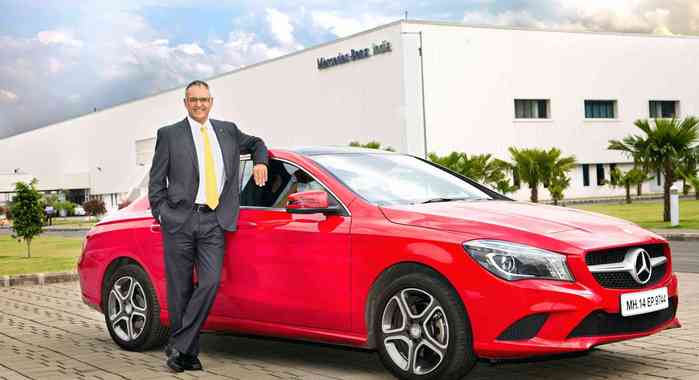
Mercedes-Benz has announced that it has registered its best ever Q2 and half-yearly sales. The German luxury carmaker has sold 6,659 units in the January-June 2015 period, posting 41% year-on-year growth. This comprises Q1 (January-March 2015) sales of 3,093 units and Q2 (April-June2015) sales of 3,093 units, which are up by 43% (April-June 2014: 2,163 units).
The company had recorded its highest-ever fiscal year sales of 11,213 units in April 2014-March 2015, up 17.5 percent (FY2013-14: 9,548 units), making Mercedes the first luxury carmaker to sell over 11,000 units in a fiscal year.
Mercedes-Benz India says the growth is buoyed by high customer acceptance of its comprehensive stable of vehicles which comprises the New Generation Cars, sedans, SUVs and Mercedes-AMG’s performance cars. SUV sales have notched 100% growth in the first six months of 2015 while the luxury sedans -- the new C-class, E-class, S-class and CLA-class remained key volume contributors and grew by 40%.
Commenting on its 2015 sales, Eberhard Kern, managing director and CEO, Mercedes-Benz India, said, “In the first six months of 2015, we sold almost as many cars as in the entire year of 2012 (7,138 units). We created a strong growth momentum in Q1, taking a clear sales lead, and are glad to sustain this stellar growth story in Q2 as well. We are on track with our long term objective of achieving a sustained profitable growth for our business in India. This performance firmly underlines the acceptance of our customer-focused approach. With some of the most awaited products in the pipeline for the remaining two quarters, including the much-awaited AMG GT, Mercedes-Benz is all set for another year of strong growth.”
For year 2015, Mercedes-Benz India is aggressively pursuing its ’15 for 15’ product strategy. It has already launched six cars in the first six months of 2015 with nine more to follow in the second half. It is also expanding its network – currently numbering 73 outlets in 39 cities – across the country, and plans to open 12 more dealerships between July and December 2015.
The luxury car battle in India
In the battle for the luxury car buyer in India, Mercedes-Benz India has a formidable rival in Audi India, which is also aggressively driving its growth and sales strategy. In FY2014-15, Audi India, which sold 11,292 cars, had pipped Mercedes-Benz India, which sold 11,213 units, by a small margin of 79 cars. BMW, the other player in the German luxury car troika, has not shared its India sales numbers yet.
The Indian luxury car market, which saw sales of around 33,000 units in FY2014-15, is expected to grow by 7-10 percent in 2015-16. The coming months will see the battle between these luxury car majors further intensify through new models, increased localisation levels which help bring down prices and improved customer interface. Watch this space.
- See more at: http://www.autocarpro.in/news-national/mercedes-benz-posts-q2-h1-sales-india-8769#sthash.Ywuwqmkj.dpuf
mtek Group acquires Volvo Cars' component plant in Sweden
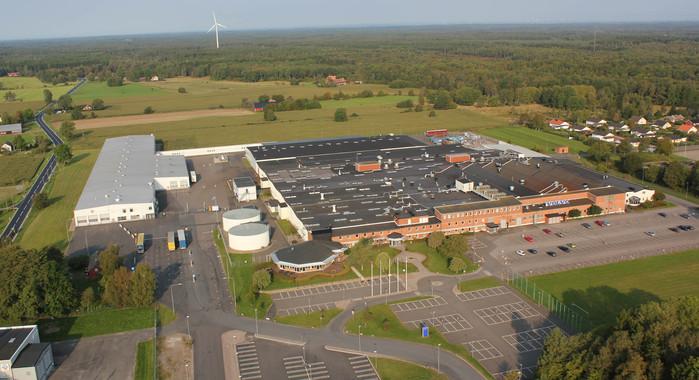
Volvo Cars has announced that its component plant in Floby, Sweden will be sold to India’s Amtek Group. The Floby plant produces brake discs, wheel hubs and connecting rods for passenger cars and commercial vehicles. The Floby plant, located in Western Sweden, is a supplier to the global automotive industry with around 70 percent of its output sold to external customers, outside Volvo Cars. The plant, which has a long history of high quality products and long-term customer relationships, employs 441 people, all of whom will retain their positions under the new ownership. “I am very pleased with Amtek as the new owner of the Floby plant. As a global company with a strong presence in the automotive business, Amtek is in a good position to develop and further strengthen the competitiveness of the Floby plant,” said Lars Wrebo, senior vice-president (Purchasing and Manufacturing), Volvo Cars.
The Amtek Group is one of the largest integrated component manufacturers in India with a strong global presence. It has also become one of the world’s largest global forging and integrated machining companies. The Group has operations across forging, iron and aluminium castings, machining and sub-assemblies. It has world-class facilities across India, UK, Germany, Brazil, Italy, Mexico, Hungary and US. The Group is comprised of corporate entities including Amtek Auto, JMT Auto, Amtek Global Technologies and other subsidiaries and associates. Amtek has a large and varied global clientele. In the two-wheeler industry, it caters to Hero MotoCorp, Honda, Suzuki, Yamaha and TVS Motor Co. For passenger cars, it supplies to Jaguar Land Rover, BMW, Daimler, Chrysler, General Motors, Hyundai, Magna, Maruti Suzuki India, Tata Motors and Honda, among others.
In the heavy commercial vehicle segment, its components are supplied to Detroit Diesel, Daimler, Iveco, MAN, Scania, Volvo, Tata Motors and Force Motors while it supplies components for light commercial vehicles to Ashok Leyland, Mahindra & Mahindra, Eicher Motors, Nissan, Tata Motors and Swaraj Mazda. Under Amtek's ownership, Volvo Cars will continue to source components from the Floby plant. The change of ownership will take place at the end of calendar year 2015. No financial details about the transaction have been disclosed.
Hyundai Elite i20 petrol outsells diesel variant by small margin

In a scant 14 months since its launch, Hyundai Motor India’s Elite i20 hatchback has driven past the 100,000 unit sales landmark in the domestic market. Till end-May 2015, the car had clocked total sales of 100,506 units – 51,326 of them petrol and 49,180 diesel variants.
This clearly points to the return of petrol in the car market as a result of the tightening price gap between the two fuels. Launched on August 11, 2014, the second-generation i20 model has seen its sales consistently grow month on month. From its opening sales of 809 units in July 2014, the car has seen its maximum sales of 12,812 units in March 2015.
In May 2015, the Elite i20 sold a total of 10,334 units. Commenting on the landmark sales, B S Seo, MD and CEO, Hyundai Motor India, said: “We are overwhelmed with the customer’s response by receiving over unprecedented 100,000 sales for the Elite i20 in 11 months. This reflects the strong customer connect and confidence on Hyundai products.”
Chevrolet takes covers off new 2016 Cruze, India entry in 2017
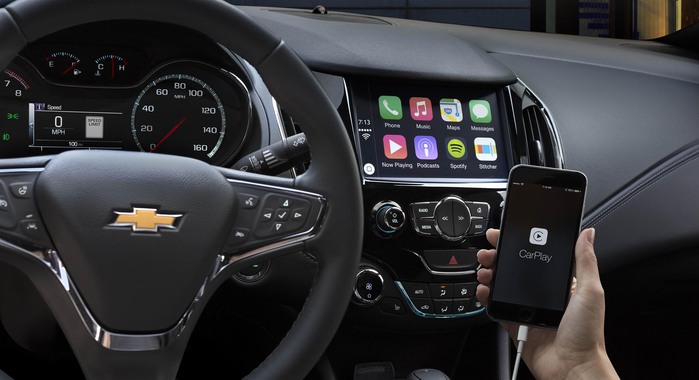
Chevrolet unveiled the second-generation Cruze sedan at a world premiere at the Filmore Theatre in Detroit. The brand's best-selling global car now features a redesigned exterior and interior and now rides on GM’s new D2 FWD platform.
The new Chevrolet Cruze sedan varies in its exterior styling from the one unveiled for the Chinese market last year. Its design gets styling inspired from the present-day Chevrolet models including the recently-unveiled Chevrolet Volt electric car. On the exterior, it gets projector headlamps and LED daytime running lamps on higher models.
Like the current car, the new Chevrolet Cruze’s interior gets a dual-cockpit design and comes with a piano-black or brushed aluminum finish along with multiple soft-touch surfaces on the dash and other parts. A large screen sits at the centre of the dash and is surrounded by two vertical AC vents.
The new Cruze is longer than its predecessor; it adds 15mm more to its wheelbase and 69mm to its overall length of 4666mm. It also offers more interior room than the earlier model and additional rear knee room of 51mm. The new Chevrolet Cruze petrol sold in North America is lighter than its predecessor by around 113kg. According to GM, it features one of the “most mass-efficient” chassis systems currently available in the market. It also features 27 percent stiffer body as compared to its predecessor.
Two new engine options for India
The all-new Cruze is likely to come to India with two new engine options. The 2-litre diesel will be replaced by a smaller, state-of-the-art 1.6 variable geometry turbo-diesel, which GM’s powertrain engineer claims is ‘whisper quiet’ and sets a new benchmark for refinement. Featuring the latest injection technology and new low friction components, this 1.6 diesel is expected to be very fuel efficient too. The power and torque for this new engine has not been revealed but company sources hint that figures could be close to the earlier 2-litre engine. With demand for petrol motors returning, Chevrolet, for the first time in India, will offer the Cruze with a petrol engine – the Ecotec 1.4 turbo-petrol with direct-injection developing 153bhp and 24.47kgm of torque.
“The new Ecotec family is a globally designed and manufactured engine designed to offer class-leading performance, efficiency and refinement in a wide variety of applications around the world,” said Dan Nicholson, vice-president, GM Global Powertrain. “Each variant is designed for a specific application or local market, but all share design, performance and refinement traits that make the new architecture one of the most adaptable in the industry.” The new Chevrolet Cruze for North America gets MacPherson strut suspension up front and a torsion beam axle on the lower models and an enhanced Z-link design on higher trims. It gets 15-inch wheels for the lower-specced trims while the higher variants get 17-inch or 18-inch wheels. Safety features such as 10 airbags, ESP, rollover mitigation and ABS are standard on all trims. The sedan also gets four-wheel disc brakes, a rearview camera and available GM OnStar with a 4G LTE system along with a Wi-Fi hotspot feature. Available advanced safety features include Side Blind Zone Alert, Rear Cross-Traffic Alert, Lane Keep Assist and Forward Collision Alert The new Chevrolet Cruze also gets GM’s MyLink Infotainment system equipped with a 7-inch touchscreen that is compatible with both Apple CarPlay and Andriod Auto. Also available is the MyLink radio with larger 8-inch display that also gets navigation and Apple CarPlay. It also gets features including wireless phone charging, heated rear leather seats and heated, leather-wrapped steering wheel for higher trims. The new Chevrolet Cruze will be eventually sold in 40 international markets and will be available in both left-hand and right-hand drive configurations. It is expected to reach Indian showrooms in 2017.
BMWs Mini Obtains a Brand-new Company logo To Show off
BMW’s wholly owned subsidiary, MINI, is up for a reinvention that will include changes to the Logo and the company strategy. Mr. Peter Schwarzenbauer, a member of the board of Management of BMW AG, responsible for MINI, Rolls-Royce, BMW Motorrad and after sales, briefed about his plans to develop the brand. The announcement took place at the world premiere of the new MINI Clubman. The car is doing decently in India as well, so much so that the line-up is expanding with respectable pace, the latest launch being the MINI Cooper S.
The new logo is simply done in a bold-black border, a circle containing the MINI name surrounded winged lines.
Talking on MINI, Mr. Schwarzenbauer stated, “Since its creation in 1959, the brand has always stood for ideas, inspiration and passion. That will not change. The new MINI Clubman is the symbol of our refined brand philosophy: We will concentrate in future on five core models with strong characters. We will open ourselves up to new ideas and new business areas. We will develop the brand’s visual identity. We are expanding our offering into the premium compact class, which will attract new customers and avid MINI fans. I firmly believe that this comprehensive realignment will enable us to continue the MINI brand’s unique success story.”
The brand name is experiencing rapid development in the present year and also has actually retailed over 1,63,000 devices in the very first fifty percent alone. Mr. Peter claimed that this has actually been the most effective June in MINI’s past history that shows in the direction of a net development greater than 20 %. MINI was relaunched back in the 2001 and also since it has actually increased, each time far better compared to the previous year.
Mr. Peter Schwarzenbauer, a participant of the board of Administration of BMW AG, liable for MINI, Rolls-Royce, BMW Motorrad and also after online sales, informed regarding his strategies to create the brand name. The news took location at the globe opened of the brand-new MINI Clubman. The brand-new MINI Clubman is the icon of our polished brand name viewpoint: We will certainly focus in future on 5 core designs with solid personalities.
Sajid Yacoob Speaks on Turning Heads of Auto Industry in 2015
Car Sector has returned back with a bang as great times have turned up through a captivating blend of low rates of interest and gas prices and a perking economy. Automobile admirers are extremely ecstatic with the advancement.
"Improving technology, aging vehicles and fuel economy are motivating customers into the new car market," says Evan D'silva, Mobilestyx Consulting and Solutions. Improving fuel effectiveness is among the factors that lots of customers are refraining from smaller cars for bigger SUVs and crossovers.
Technology options are possessed by latest models such as safety features which include rear cameras, park assist and collision avoidance. Additionally there are brand-new cars which have the facility to synchronize cell phones with one's car as well as incorporate Wi-Fi features. Not only that the current models have dark adaptation with pedestrian detection ability, but with that the designs also have been transforming. The auto versions are embracing aggressive and luxurious visage.
Sajid Yacoob, Vice-President of Jaguar Land Rover says, "With enhancements in fuel effectiveness, connected-driving technology and safety features frequently rising, the industry is turning heads this year."
NAFTA REGION AND APAC SALES DRIVE MERCEDES-BENZ NUMBERS IN MAY
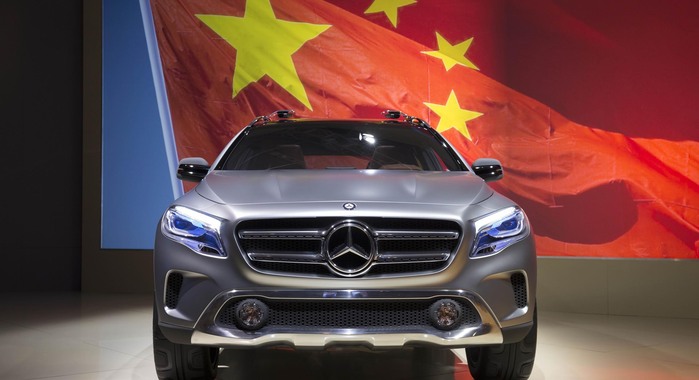
Mercedes-Benz has announced that it has sold over 151,135 vehicles to customers in May 2015, 12.8% more than in the same month of the previous year. The carmaker also recorded a double-digit sales increase since the beginning of the year with deliveries rising by 13.6% to 728,809 vehicles. "With the GLC, which celebrates its world premiere in Germany this month, we plan to build on our success story,” says Ola Källenius, member of the Board of Management of Daimler AG, responsible for Mercedes-Benz Cars Marketing & Sales.
“Its predecessor, the GLK, is currently our top-selling SUV,” continues Källenius. In Europe, Mercedes-Benz sold more vehicles in the first five months of the year than ever before in this period – 316,324 units (+10.5%) and in May it sold 65,056 units. The company posted record sales in the UK (+11.6%), Sweden (+15.7%), and Portugal (+30.9%). With 22,252 units, sales in Germany were slightly higher in May than in the same month last year, making Mercedes-Benz the leading premium manufacturer in its home market. The brand also secured the market leadership in Italy and Portugal last month. Sales in the NAFTA region rose by 13.8% (34,488 units) in May, achieving a new record. Of this, 29,583 units were sold in the USA (+11.1%). Together with the USA, Canada also achieved an all-time high with a sales increase of 32.8%.
Last month, the biggest increase was posted in the Asia-Pacific region, where sales rose by 23.4% to a record value of 46,260 vehicles. In China, sales increased by 19.8% to 27,562 units. In Japan, where Mercedes-Benz is the leading premium manufacturer, the brand sold 40.6% more vehicles in May than in the same month of the previous year. In Australia, Mercedes-Benz achieved a sales record with 2,385 units sold in May. Furthermore, the brand with the star recorded particularly strong growth in South Korea (+44.8%). The demand for Mercedes-Benz compact cars continues to develop very positively, with deliveries rising to 46,363 units in May (+22.3%). Mercedes-Benz has never before sold so many compact cars in May. Both, the CLA and GLA posted sales records. Global sales of the C-Class Saloon and Estate increased by 59.5% to 33,016 units in May. In the first five months of the year, Mercedes-Benz posted a new record with 174,875 vehicles sold (+57.3%). The brand with the star has delivered a total of more than eight million C-Class Saloons and Estates to customers since the model series was introduced in 1982.
Till May, the demand for E-Class Saloons and Estates was particularly high in China. Never before have so many E-Class Saloons and Estates been sold in the biggest sales market of these two models in the first five months of the year. The S-Class Saloon is still the world’s best-selling luxury saloon in May, with sales rising to the record amount of 8,550 units. The biggest sales market of the model series is China followed by the USA. The SUV segment posted a sales record in May with 41,210 units (+18.7%). The successor of the GLK, the GLC, will celebrate its world premiere in Germany in June. The demand for the GLK continues to be extremely high. Since the beginning of the year, more GLK have been sold in Germany and China than ever before in the corresponding period.
INDIA ENTERS HONDA'S TOP 5 CLUB, ATTRACTS MORE INTEREST
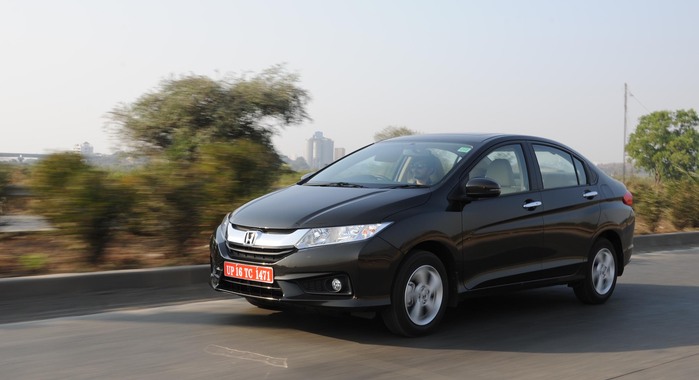
India is the sixth market for Katsushi Inoue outside Japan to be posted in. The Honda veteran exudes excitement in his two-month-old role as president and CEO of Honda Cars India. He has reason to. Apart from the revival of the Indian car market and the long-term attractive prospects, India is capturing more mind space in the boardroom of Honda's global headquarters in Japan. This market has jumped two rungs from sixth position in 2013-14 to be the fourth largest market for Honda in 2014-15 when Honda Cars India sold 180,000 vehicles. The top five markets for Honda at present are the USA, China, Japan, India and Canada.
In one of his first media interactions in India, Inoue says that he wants brand Honda to "move from customer satisfaction to customer delight". The top priority, therefore, is to enhance the quality of Honda further at every stage – production, product and retail to aftersales. The industry veteran, who has served in Japan, Thailand, Malaysia, UK, Poland and Germany in his nearly 30-year stint so far in Honda, is wary of the fact that in the industry when volume grows, quality tends to go down sometimes. Honda has had a good run in India, driven mainly by its midsize sedan, the City. In May 2015, for example, Honda sold more Citys (7,562 units) than the combined sales of its Brio, Mobilio, Amaze and CR-V. To meet the strong demand, production capacity of the City will be hiked next year.
Most of the City's, and Honda's overall sales, come from urban markets in India. The challenge for the brand is to make inroads into relatively smaller markets, many of which are emerging markets for the automotive industry. In many of these markets, the push strategy is needed to gain customers, which is in contrast to the pull that Honda thrives on in its current markets. Hiroyuki Shimizu, senior vice-president and director, marketing and sales, Honda Cars India, who joined the company together with Inoue has this as one of his main tasks. Sales network expansion will be key. The company plans to take the count of authorised dealerships to 300 outlets in 200 cities, and 48 outlets will be added in Tier 3 cities. An established wide network will also be crucial for a model or two in the bottom of the portfolio pyramid in the future.
VW INDIA WORKING ON PHASE TWO OF 1.5 DIESEL ENGINE LOCALISATION PROGRAM
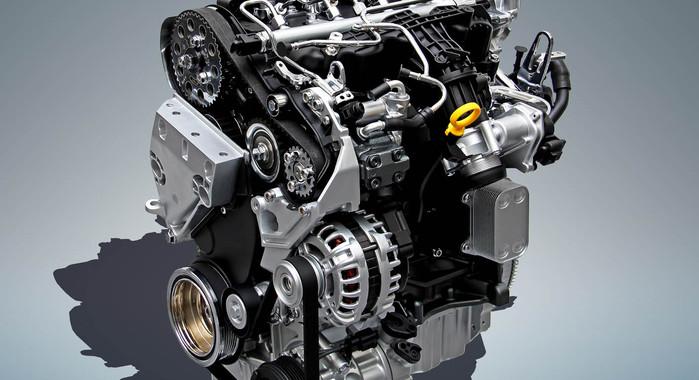
Volkswagen India is now working to further localise its popular 1.5-litre diesel powertrain at its Chakan (Pune) plant. Under phase two of its engine localisation program, VW India’s corporate purchase department plans to select a few more local suppliers to source another set of 15 crucial engine components for the 1.5 TDI engine. It is known that under phase one of the local assembly operations of its 1.5 TDI, the company currently sources 25 different high-value components such as turbocharger, connecting rods, vacuum lines, flywheels, engine brackets, oil sumps and others from 18 different local suppliers, of which some are already existing suppliers to the company.
To finalise these 18 local vendors, VW India had considered close to 35 different component suppliers in the bidding process. In an email interaction with Autocar Professional, Hans-Georg Festing, executive director, corporate purchase, Volkswagen India, revealed that, “as of now, 25 parts have been locally acquired and these are for the first phase of localisation. We are currently in the second phase of localisation and this would add another approximately 15 parts.” Some of the suppliers which are already supplying engine parts to VW India are the Bangalore-based, US$-100 million Sansera Engineering (manufactures high-precision machined engine parts such as connecting rods, rocker arms, gearshift forks, crankshafts and others for four- and two-wheelers); Honeywell Turbo Technologies India (manufactures turbochargers for Honda Cars India, Tata Motors and other OEMs); Rane Engine Valves (manufacturers engine valves and valvetrain components); and Mahabal Group (Maharashtra-based US$ 70 million supplier of cylinder heads, manifolds, assembly flywheels, brackets, hubs, pulleys, front axle assembly, braking systems and many other parts).
Volkswagen India, which has been working to achieve operational profitability through various local developments at its Chakan and at Aurangabad facilities, has invested euro 30 million (approximately Rs 240 crore) in setting up the new engine assembly plant at its Chakan facility. The engine assembly plant, located adjacent to the main car assembly area, is spread across 3,450 square metres. “We have invested on setting up the assembly line, engine testing facilities, manpower training, localisation, and on other areas. There is a single assembly line for the engines and the total assembly capacity is over 98,000 engines annually in a three-shift system. At the moment, the facility is running in a single-shift system and assembling engines as per the demand from the market,” added Festing. Currently, the 1.5-litre diesel engine powers all three cars manufactured at the VW Pune plant – VW Polo, VW Vento and Skoda Rapid.
The engine is available in two power outputs (90 PS and 105 PS). “The 1.5-litre TDI engine contributes to over 40 percent of the total cars produced at the Volkswagen Pune plant for the domestic market. With local assembly of this engine, the necessity to import those many engines from Europe has reduced, thus improving the overall cost structure as imported engines attract higher costs,” said Festing. Festing also said that the suppliers to VW India stand a chance to win orders from VW globally as well. “There are several suppliers of VW India which have been first-time suppliers to the Volkswagen world. After being developed here, they are now supplying to our global plants, not only of the Volkswagen brand but also other brands of the Volkswagen Group. While this is true in case of a lot of suppliers for other parts of the car, it is also true for some engine parts. For example, the crankshaft from Bharat Forge is being exported by the supplier to the Volkswagen plant in Polkowice, Poland and to the Audi plant in Gyar, Hungary,” he said.
Jaguar Land Rover Reveals Bike Sense Safety Technology
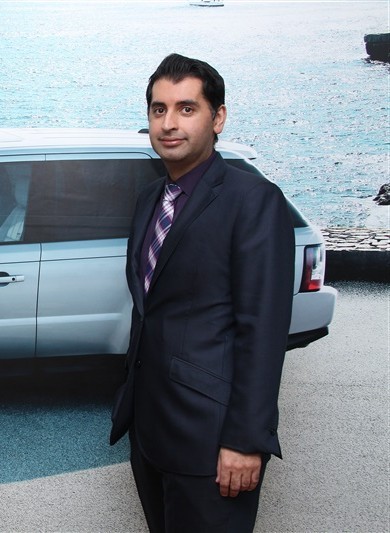
Jaguar Land Rover is designing a series of innovative equipment that would use touch, colors and sound within the car to warn drivers to likely risks and avert mistakes concerning bicycles and motorbikes.
The sound system of either a motorcycle horn or bicycle bell will alert the driver through the speaker. For the driver’s understanding of the bike is in relation to their car, the audio system will make it sound as if a motorcycle or bicycle horn is coming through the speaker next to the bike, so the driver immediately figures out the direction the cyclist is approaching from. Bike Sense uses sounds and lights that the driver will mechanically associate with the probable threat.
As the cyclist gets nearer, a matrix of LED lights - on the window sills, dashboard and A-pillars - will glow up as ocher and then red to give one an idea about the cyclist's location and its propinquity to the vehicle.
Bike Sense would also be capable to spot hazards that the driver cannot make out. If a pedestrian or cyclist is crossing the road, and they are covered by a stationary vehicle for example, the car's sensors will perceive this and draw the driver's notice to the danger using directional sound and light.
In case the driver disregards the cautions and presses the accelerator, Bike Sense will make the accelerator knob vibrate or feel stiff, so the driver instinctively knows not to move the car ahead until the vulnerability has been prevented.
Jaguar Land Rover considers this system could reduce the danger of hazards with all road users by captivating the correct action and growing the speed of response to avoid a misfortune incident. This system has been created so as to avoid accidents with cyclists who fall prey to road fatalities every year. We wished to have a conversation with Mr. Sajid Yacoob- Vice President of Jaguar Land Rover India. But unfortunately, he wasn’t available to comment.
Volvo Cars to host 2015 Enhanced Safety of Vehicles Conference in Gothenburg
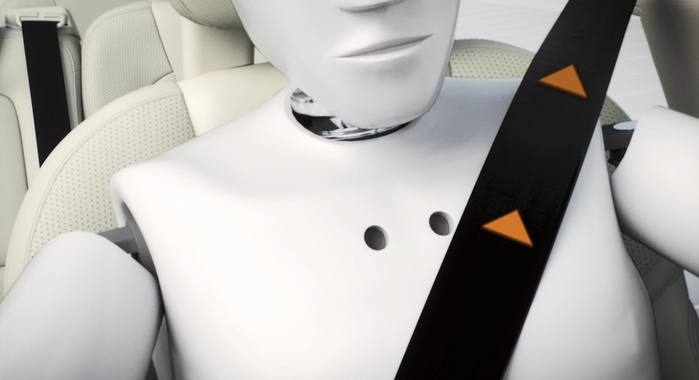
The world’s foremost vehicle safety conferences – the International Technical Conference on the Enhanced Safety of Vehicles (ESV) – is to take place in Volvo Cars’ hometown of Gothenburg, Sweden, from June 8-11 this year. The conference, organised by the United States’ National Highway Traffic Safety Administration (NHTSA), is internationally focused with participating governments, carmakers, academia and other interested parties from across the globe.
The main focus of the conference will be the presentation of scientific papers, government status reports and workshops aimed at taking vehicle safety to the next level. “The fact that the conference is being held in Volvo Cars’ hometown of Gothenburg this year is no coincidence. Volvo Cars is a clear leader in the field of vehicle safety research. Our ongoing commitment to developing real-world safety solutions that save lives is well known. Our longer term goal is to create cars that do not crash. In the short term our vision is that no one will be seriously injured or killed in a new Volvo car by 2020, and we remain confident that we can achieve this,” said Dr Peter Mertens, senior vice-president (Research & Development) at Volvo Car Group.
Volvo Cars will demonstrate its leadership in safety by contributing in several areas during the conference, including the presentation of papers on subjects as diverse as the effectiveness of advanced driver assistance systems, the response of muscles in the human body in pre-collision situations, driver distraction guidelines and run off road accidents. The Swedish carmaker will also cover the new safety systems launched in the XC90 and participate in a plenary session with Volvo Cars’ Head of R&D, Dr Peter Mertens.
Maruti Suzuki powers Celerio with in-house developed diesel engine

Maruti Suzuki India today introduced the diesel-engined model of its popular Celerio hatchback. The car, which first introduced automated manual transmission (AMT) in the Indian market, now becomes the first car to offer a compact diesel engine (DDiS 125).
The car, badged DDiS 125, has been priced at Rs 4.65 lakh for the entry level variant while the top-end ZDi (OPT) costs Rs 5.71 lakh (ex-showroom Delhi).
This launch of the Celerio Diesel also marks the global launch of the DDiS 125, the first diesel engine designed and developed by Suzuki. It is a defining moment for Suzuki as this motor is the first-ever in-house diesel in its 106-year history.
The lightweight and compact 2-cylinder 0.8-litre E08A diesel engine for compact cars is a milestone for Suzuki. The Japanese carmaker has been installing diesel engines mainly onto overseas models varying from 1.3 litres to 2.0 litres, which were supplied from or produced under the license of other manufacturers. To meet the need for diesel engine variants in the Indian market, Suzuki has developed this in-house, 2-cylinder 0.8-litre E08A diesel engine.
The E08A diesel engine has realised weight-saving by adopting aluminium for the material for the cylinder block and installing a compact fuel distributor system and turbocharger suited for a 2-cylinder engine. By decreasing the compression ratio and installing a large intercooler, it has combined high torque in the low rpm range and fuel efficiency. Also, by optimising the flywheel, the low frequency vibration specific to 2-cylinder diesel engine has been mitigated.
The all-aluminium DDiS 125, which develops 47bhp@3500rpm and torque of 12.74kgm at 2000rpm.
Upon installing the engine into the Celerio, low frequency vibration and combustion noise from the engine have been mitigated by optimising the engine mount and vehicle body rigidity, as well as adding noise absorption materials to raise comfort levels.
The Celerio Diesel becomes the first car to use this engine. Until now the carmaker relied on Fiat-sourced engines to power its vehicles. Importantly, in a brave move, Maruti is going ahead with its diesel engine programme despite the narrowing gap between petrol and diesel fuel prices in India.
Audi India launches RS 6 Avant at Rs 1.35 crore
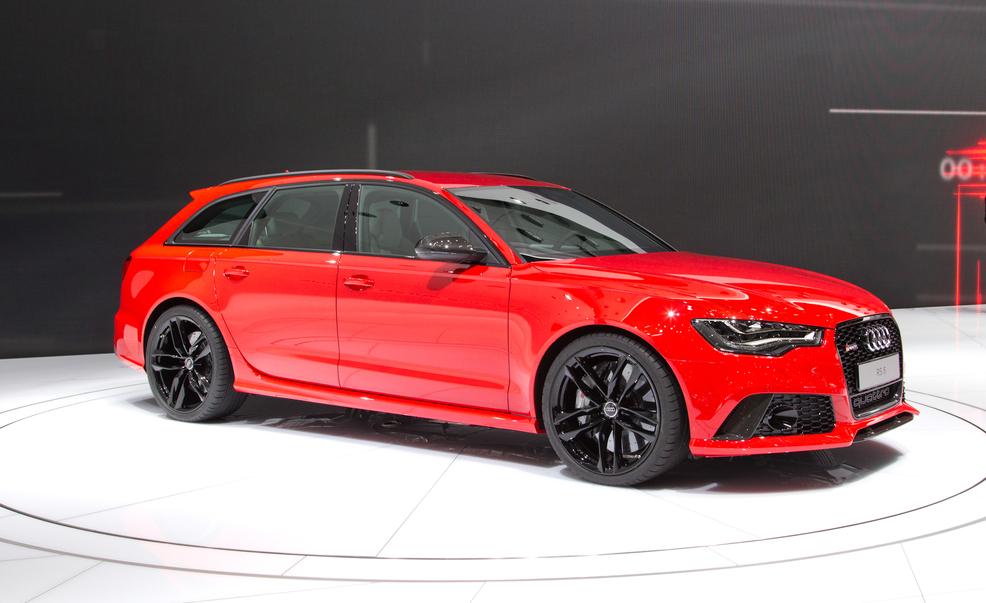
Audi India has rolled out its RS 6 Avant sportscar, which bears a sticker price of Rs 1,35,00,750 (ex-showroom Delhi and Mumbai). The RS S Avant will be available at all Audi dealerships across India. The car, which is powered by a 4.0 TFSI twin-turbo V8 engine that develops 560bhp, is being projected as a high performer with suitability for daily use. The RS 6 Avant accelerates from 0 to 100kph in a scant 3.9 seconds and has a top speed of 305kph with the optional Dynamic Package Plus.
Leveraging Audi’s cylinder-on-demand technology that combines performance with low fuel consumption and emissions, it deactivates four cylinders in part-load operation and, according to the company, achieves low fuel consumption and low CO2 emissions. The RS 6 Avant has an adaptive air suspension that lowers the body by 20mm. Audi is offering the RS sport suspension with Dynamic Ride Control (DRC) as an option. Being linked into the Audi Drive Select feature, the suspension can be customised across a range of characteristics. Four modes can be selected – Auto, Comfort, Dynamic and Individual. The RS6 Avant also gets 20-inch wheels as standard; 21‑inch wheels will be offered as an option. “The RS 6 Avant is our fourth sports car to be launched in India this year, after the R8 LMX, the new TT Coupe and the new RS 7 Sportback. All these sports cars have received a phenomenal response in the market reiterating the fact that Audi has gauged the pulse of the Indian customer right.
The RS 6 Avant will not only help us consolidate our leadership position in the performance car segment, but will also inspire us to continue with our commitment to bring in the right product offering at the right time for our Indian customer,” said Joe King, head, Audi India, at the launch today in New Delhi. The RS6 Avant will be brought in as a CBU and will serve as a halo model in Audi's India line-up. The premium car manufacturer is keen on increasing efforts to maintain the leadership that it currently holds in the luxury car market in India. In FY 2014-15, Audi posted record sales of 11,292 units, up 11.51 percent from the previous year, beating arch rival Mercedes-Benz to the No. 1 spot by selling just 79 units more. BMW, on the other hand, is behind two German automakers in India by a large margin.
Sajid Yacoob at the Business in the Community (BITC) Ceremony
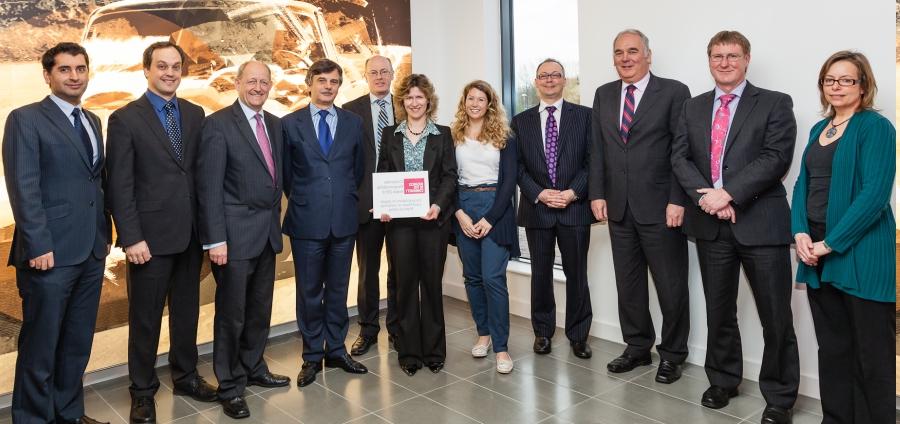
In recent times the focus on corporate social responsibility has raised, and at no place was this else noticeable than at the Business in the Community Ceremony (BITC), wherein the subject was focused on by Sajid Yacoob of Jaguar Land Rover.
Sajid Yacoob, presently the Vice President of Jaguar Land Rover India said, “It is good to see the global focus on CSR. Recent positive changes via the Companies Act in India will hopefully see CSR activities grow even further.”
As indicating by Mr. Yacoob, companies today can not exist solely for the purpose of making profits. While consumers still rely on corporations for services and goods, today's customers make their decisions on numerous factors including what the company does besides the business.
According to industry observers, it’s not surprising that the BITC placed emphasis on this subject because it leads to a better public image. Recent studies show that the public image of a company is dependent on its social responsibility and more and more people judge companies by the way they interact and impact the community around them.
About Jaguar Land Rover.
Jaguar Land Rover is among the most significant auto producing companies globally, and is well-known for their 2 flagship lines, the Jaguar and the Land Rover. Ever since its beginning, the company has remained to expand operations and now has subsidiaries in various other countries like China.
Bentley Bentayga snooped beyond camouflage
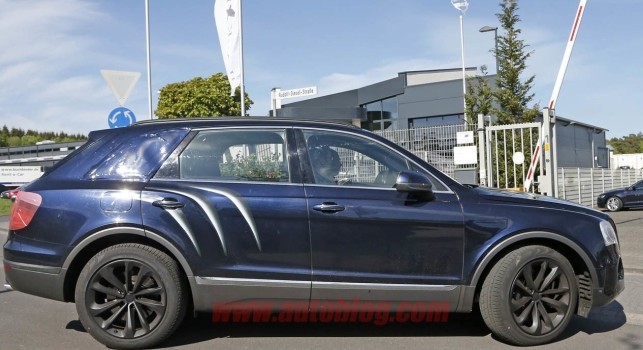
Bentley as well revealed their SUV, named Bentayga and we have already seen the car testing in the desert and near Arctic Circle. Presently, Autoblog has caught the SUV with little camouflage covering it at the Volkswagen Group’s testing facility at the Nurburging. The Bentayga was wearing very little camou just around the headlamps and tail lights.
Bentley has started teasing various images and videos of the Bentayga, revealing some part of the interiors. The Bentayga is anticipated to be launched with a W12 engine initially and other engines including a diesel V8 and a plug-in hybrid will be added later. The instrument cluster of the Bentayga gets dual pod design with a digital display in between that's used as a night vision screen and also for navigation.
Schaeffler bags gold award from Toyota
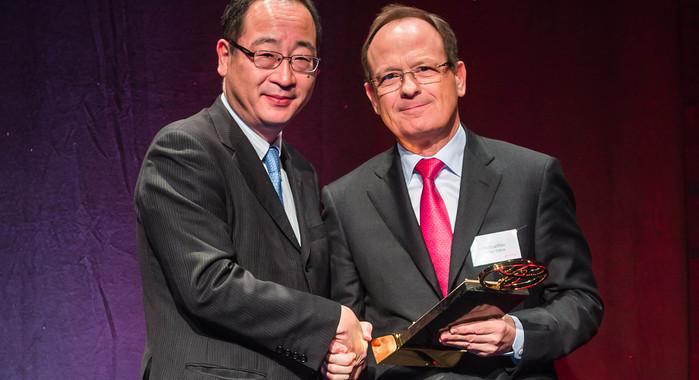
Schaeffler has received one of the coveted gold awards in the category value analysis from Toyota Motor Europe. Every year, suppliers are requested to identify cost and quality potential for volume-production products in accordance with the Kaizen philosophy. With its value analyses, Schaeffler has contributed to the continuous improvement of products, also in terms of costs, and captured a leading position in Toyota's top supplier ranking list. In its justification of the award, Toyota particularly emphasized the success achieved in the product segment hydraulic valve lash adjustment elements.
This is the first time that a gold award was presented in this category. "This award is also proof of our excellent expertise in vertical integration because only the relevant understanding of processes produces such high-quality analyses," said Prof. Peter Pleus, CEO Automotive at Schaeffler AG, who accepted the prize for Schaeffler. Schaeffler is currently producing engine and transmission components for Toyota in seven European plants. The product portfolio ranges from clutches, dual mass flywheels and detent pins through to hydraulic pivot elements and mechanical tappets.
Nissan and BMW to expand EV charging infrastructure in South Africa
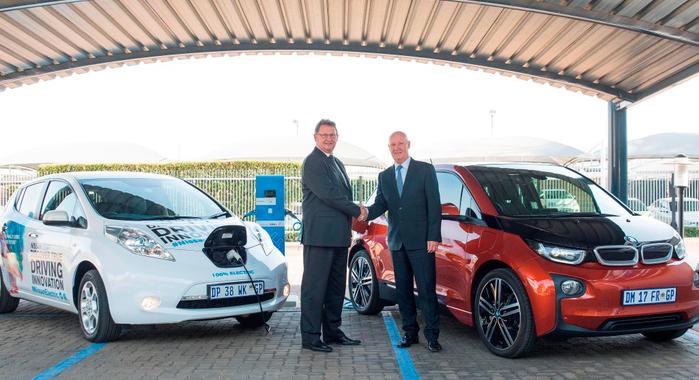
Nissan and BMW confirmed they will collaborate to advance electric vehicle (EV) and plug-in hybrid vehicle (PHEV) adoption in South Africa. Nissan South Africa (NSA) and BMW Group (BMW SA) signed a Memorandum of Understanding to jointly plan and build a national grid of EV and PHEV vehicle charging stations for use by both Nissan and BMW vehicles. The agreement between BMW SA and NSA is effective immediately and will run until 2017. "Our introduction of the 100% electric Nissan Leaf in 2013 was part of Nissan's global drive to advance sustainable mobility and to grow the market for zero-emission vehicles.
With this in mind we believe our partnership with BMW SA is a sound investment to create a future-proof automobile industry," says Mike Whitfield, managing director of Nissan South Africa. Tim Abbott, managing director of BMW South Africa, says industry wide cooperation is the key to the future success of electric vehicles. "We have successfully launched the BMW i3 and i8. A key imperative of our strategy is to ensure that the necessary infrastructure is rolled out to help increase consumer confidence in the viability of electric vehicles. We therefore believe that in order for the introduction and expansion of electric vehicles as well as plug-in hybrid electric vehicles to be successful in this market, we need to work together. Our partnership with Nissan is the first step towards that." The agreement will see BMW SA and NSA roll out direct current (DC) fast-charging stations that are equipped with both the Combined Charging System 2 (CCS2) used by BMW's electric and plug-in hybrid models and the Charge de Move system (CHAdeMO) plug standards used by Nissan's 100% electric Leaf.
The national grid of charging stations will also make use of smaller alternating current (AC) type vehicle chargers in certain regions. As part of the newly signed agreement, these chargers will be equipped with 'Type 2' sockets that allow the connection of all EVs and PHEVs. Planning and building a national electric vehicle charging infrastructure are major feats, and the grid will be managed by a joint task team comprising executives from both manufacturers. "By sharing expertise, ideas and challenges BMW and Nissan will accelerate the growth and consumer acceptance of the EV and PHEV market to the benefit of the entire automotive industry. These organisations have shown the same insight in establishing a vehicle charging grid as they did in creating their futuristic electric vehicles," says Mike Schüssler, chief economist of Economist.co.za and an automotive market specialist. BMW SA introduced its EV and PHEV models, the BMW i3 and the BMW i8 in March this year. Both models have received global recognition for their innovative technology and low carbon emissions. In 2014 the BMW i3 was named the Green Car of the Year by the Green Car Journal, and the BMW i8 in turn was named the 2015 World Green Car of the Year. Nissan started the zero emissions movement in 2010 when it introduced the Leaf as the world's first mass-produced EV. Its innovative design, modern battery technology and role in creating a market for 100% electric vehicles were recognised when it was named World Car of the Year in 2011. The Leaf was introduced in South Africa in 2013 and to date over 174,000 units of the pure-electric Leaf has been sold worldwide.
Sajid Yacoob at the Chery Jaguar Land Rover Joint Venture Signing
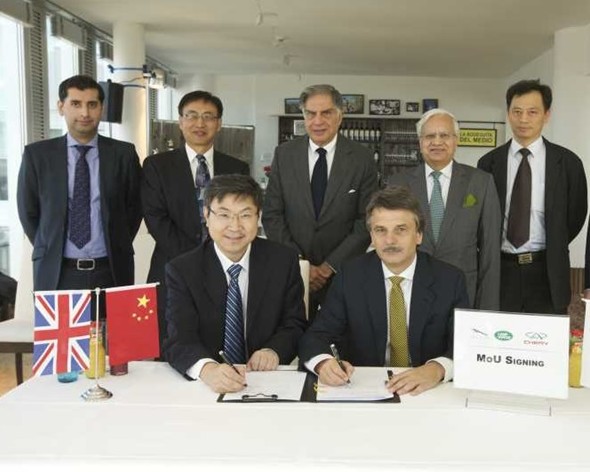
Recently, the Tata Group’s Jaguar Land Rover set up its first manufacturing unit in China, and JLR Commercial Director Sajid Yacoob was involved in the project. This marks the first joint venture between the UK automotive giant and Chery Automobile, a major Chinese car company, and it has tremendous implications for the future.
The complex is set in a 40,000 square meter area and is in the Changshu Economic Development Zone north of Shanghai. Following the plant’s completion in 2014, this £ 1.1 billion joint venture is expected to be a major part of JLR and Chery operations in the coming years.
According to Mr. Yacoob, this venture represents a major milestone. Recent years have seen an increase in demand for the Land Rover in China, with one in five of the Land Rover Evoque sold in the mainland.
In addition, Mr. Yacoob says China is a fast growing market, which is attracting a number of global OEMs. According to Mr. Yin Tongyao, CEO and Chairman of Chery, the plant has a capacity of 1.1 million units a year, and by 2016 will be able to release three Jaguar Land Rovers.
According to industry experts, this joint venture is a “game changer” and will open the door for more associations between European carmakers and Chinese car companies.
About Jaguar Land Rover
Jaguar Land Rover is one of the leading automakers in the UK. As one of the major subsidiaries of Tata Motors, the company has embarked on an expansion campaign highlighted by its joint venture with Chery.
SIAM conducts CNG Awareness Workshop
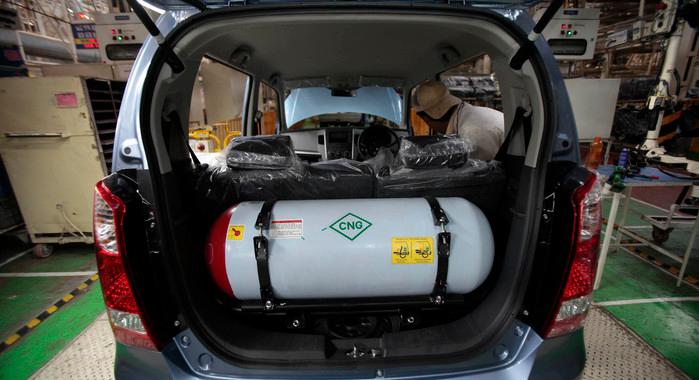
The Society of Indian Automobile Manufacturers (SIAM) conducted a CNG Awareness Workshop on May 21, which brought together stakeholders from major vehicle manufacturers, petroleum & gas industry, retrofitment industry and concerned government bodies. The workshop was intended to bring the latest technologies and safety measures to the notice of the 150 technicians and authorities who attended the workshop. The workshop also addressed the loose ends in the retrofitment industry which needed to be addressed. The first session for the workshop was opened by Vishnu Mathur, Director General, Society of Indian Automobile Manufacturers (SIAM).
He said that mobility has evolved over the past few decades and the introduction of CNG has played a major part in the same. Speaking on the occasion, the guest of honor, Mr Bhure Lal, Chairman, Environment Pollution (Prevention and Control) Authority, said that the safety and security around the use of CNG as a vehicle fuel were the major challenges that need to be addressed. He also spoke about the need for CNG as a fuel emerged at the fag-end of the last century when Delhi and NCR region were extremely polluted.
Vehicle pollution constituted only about 20% of the pollution, the situation only worsened over the past couple of decades with a rapid increase in the vehicle density in the region. He urged the entire fraternity to be diligent with their work as they would chart the course of transportation system in the region and consequently in the country. Also speaking in the first session, Mr Ujwal Bhandari, General Manager, O&M, Indraprastha Gas Limited and Mr B Singh, Controller of Explosives, Petroleum and Explosives safety Organization, who stressed the need for proper maintenance of CNG vehicles. The second session for the day started with a presentation on the overview of CNG program in India by Mr Jitendra Malhotra of Maruti Suzuki India, where he reiterated that the future of CNG as a fuel was bright, provided necessary safety measures were taken. Mr Vipul Bajpai, CLH Gaseous fuel applications Experience with CNG retrofitment in buses, also put forward his experience in the field. The session concluded with a refresher course on CNG safety which was provided by Mr Vishal Singhal, Advantek Fuel Systems.
Mercedes-Benz reaches out for the skies, to develop VIP aircraft cabin with Lufthansa Technik
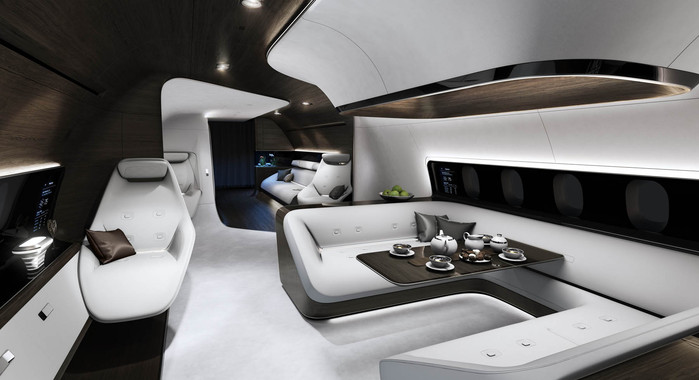
Mercedes-Benz Style and Lufthansa Technik have announced their cooperation on the design and completion of VIP aircraft cabins. The two companies will jointly develop an entirely innovative, luxurious and integrated cabin concept for short- and medium-haul aircraft. Since 2010, in addition to classic automobile design, Mercedes-Benz designers have also created designs for other products in cooperation with selected partners under the label ‘Mercedes-Benz Style’.
The aim is to transfer Mercedes-Benz's unmistakable, progressive design idiom and high standards of luxury and aesthetic appeal to other spheres of life. Under the joint approach adopted by the two companies, the traditional separation of ceiling, wall and floor will be entirely replaced by a dynamic, spiral layout. This gives rise to new, independent spatial zones without the typical arrangement of seat and wall elements. The new sense of space is additionally reinforced by Mercedes's typically strong emphasis on contrast in terms of material, colour and lighting. The overall design is characterised by the aesthetic appeal of state-of-the-art luxury embodied in the Mercedes-Benz brand. Mercedes-Benz Style and Lufthansa Technik plans to target this innovative concept at a private global clientele with a strong affinity for unique design. "It was an inspiring challenge to transfer our design philosophy of sensual purity into the area of aeronautical engineering. The spectacular architecture of the interior shows creativity and modernity. Sensual surfaces and clear forms, combined with intelligent high-tech features and perfectly shaped modern luxury are the characteristic features of Mercedes-Benz design," says Gorden Wagener, vice-president Design Daimler AG.
"The purpose of our cooperation with Mercedes-Benz Style is to unite the two companies' innovative expertise in the areas of design and technology. Our goal is to offer a highly discerning global clientele a standard of interior design that leaves nothing to be desired. Whether for private or business use, our modular completion concept perfectly fits every purpose," says Walter Heerdt, senior vice-president, VIP & Executive Jet Solutions, Lufthansa Technik AG. In a departure from the familiar design of aircraft interiors, the cabin concept adopts an entirely new approach. The interior of the cabin is organic and homogeneous like a DNA helix. Floor, wall and ceiling flow into each other. Featuring numerous innovative details, the furniture with its sensuous clarity of design merges seamlessly with the cabin interior.
The cabin windows are concealed by so-called black panels, which, inspired by the screen design in the Mercedes‑Benz S-Class, appear to float in front of the window like a light corona. Innovative Mercedes-Benz Magic Sky technology allows the panels to be dimmed electrically from black to transparent. Displays and touch screens for entertainment and information can easily be integrated into the black panels.
Tata Motors rolls out GenX Nano at Rs 1.99 lakh

Tata Motors today launched the much-awaited GenX Nano at Rs 1.99-2.89 lakh (ex-showroom, Delhi). The biggest changes to this year's version of Tata's city car are an openable hatch, a considerable facelift and the option of an automatic gearbox.
This 'GenX' Nano, as Tata calls it, debuts a lot of new features never before seen on the car. Apart from the option of an Automated Manual Transmission (AMT) gearbox, the boot can finally be accessed by an openable hatch.
When the Nano first rolled out in March 2009, the company did have to cut corners in order to achieve that famous starting price of Rs 1 lakh to make it the cheapest car in the world. But now it has been repositioned as a city car and, therefore, many comfort and convenience features have been added over the years.
The new GenX Nano will be made available in five trims — XE, XM, XT, XMA (AMT) and XTA (AMT). The AMT is a five-speed gearbox (unlike the manual, which remains a four-speed), which Tata calls 'Easy Shift’. Not only does it get a 'tiptronic' mode to shift gears manually, there's also a Sports mode for quicker responses, and a 'creep' function that moves the car forward slowly as soon as your foot is taken off the brake pedal.
The Nano GenX gets the same 624cc, two-cylinder, rear-mounted petrol engine, apart from some modifications to the ECU for slightly improved fuel efficiency. Storage capacity in the automatic car is 94 litres, while the manual car can take 110 litres. The car gets an audio system with four speakers, Bluetooth, aux-in and USB.
On the outside, the Nano GenX has smoked headlamps, a black band with a chrome strip to liven up the near-vertical bonnet, new front and rear bumpers, fog lamps and a new grille that gives the car a smiling face. Fiscal year 2014-15 wasn’t great for the Tata Nano as sales dipped 20 percent from the previous year to 16,901 units. However, with these few important and much required updates, the Nano is now far better equipped at being an easy-to-use city car than it ever has been in the past.
SAJID YACOOB APPOINTED AS JAGUAR LAND ROVER'S COMMERCIAL DIRECTOR
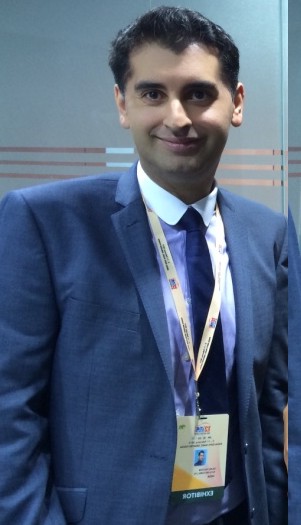
At the global IT Operations of Jaguar Land Rover, Sajid Yacoob has been appointed as Commercial Director. British luxury and Sports-car maker: Jaguar Land Rover is a leading multinational automotive company with great engineering abilities.
Sajid Yacoob will now be a part of IT Leadership team as well as of wider Jaguar Land Rover senior Leadership team. One of his major deliverable in this role will be to lead the commercial strategy of Jaguar Land Rover and negotiations for high value contracts. It will implement the best value solution for the company ensuring a balanced assistive environment servicing the interdependent, highly complex, real time IT estate.
Hyundai and Nissan donate for Nepal quake relief
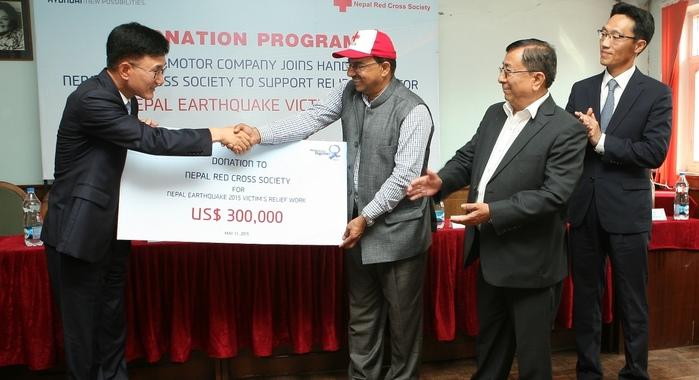
Hyundai Motor Company is donating US $300,000 (Rs 1.89 crore) for humanitarian relief and rebuilding projects in quake-hit Nepal. The donation to Nepal Red Cross Society (NRCS) will support those parts of the country devastated by last month’s earthquake.
“We would like to express our sincere condolences and best wishes to the thousands of people affected by the earthquake, as well as our hopes that the damage can be repaired as soon as possible,” said Sanqmin Park, head of Hyundai Motor’s Asia & Pacific Regional Headquarters at the handover on May 11. “The global response to this tragedy has been extraordinary, and Hyundai Motor will be looking into additional ways to support the ongoing relief and rebuilding efforts.”
Alongside its donation to NRCS, Hyundai Motor will be assisting motorists in Nepal, for example with the Before Service – repairing damaged cars, and through special discounts on service and parts. As part of its global CSR initiatives, Hyundai Motor Group has donated to a number of projects bringing much needed relief to areas affected by large-scale natural disasters, including the earthquake in Indonesia’s Yogyakarta in 2006; forest fires at Ileia, Peloponnese, Greece in 2007; China’s Sichuan earthquake in 2008; Haiti’s earthquake in 2009; Chile’s earthquake in 2010; tornados in the US in 2011; and the typhoon in Thailand in 2013. Meanwhile, Nissan Motor Co has donated 10 million yen (Rs 50 lakh) to the World Food Programme, which is aiding rescue efforts by providing food for the people in the affected areas in Nepal.
Delhi Auto Expo: Special Coverage
The eleventh Auto Expo in New Delhi had over 1500 participants and it was a colossal platform of the country's flourishing auto industry. The participants were from over fifty global brands across twenty four countries. The biggest automotive show in India picked up impressive steam even though it was chilly winter in Delhi. During its week extended rundown from January 5 to the 11th of the month, and was host to several of the most thrilling 2-wheeler, 4-wheeler, technology and commercial vehicle was launched all beneath one solitary roof at Pragati Maidan.
Sajid Yacoob, the Vice President of Jaguar Land Rover India said, “India is on course to become one of the top automobile economies of the world, powered by the middle class and continued government support. It feels great to see the country’s progress”.
Amongst the slew of extremely estimated launches and Indian debuts that took place at the event were the all-new Hyundai Sonata, the Maruti Suzuki Ertiga MPV, and the Nissan Evalia (NV200), seven motorcycles by Triumph, the street-fighter model from Ducati, the 795 and the Audi Q3 compact SUV.
CDK Global targets auto retail industry in India
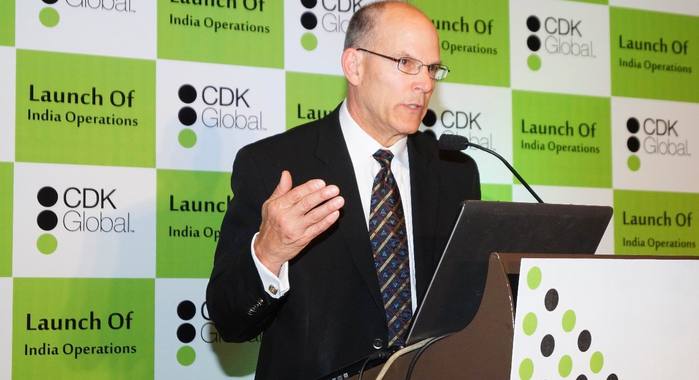
CDK Global, Inc, a global leader in providing integrated information technology and digital marketing solutions for the automotive retail industry, today announced the launch of its India operations.
Operating in India as CDK Global (India), the company inaugurated its facilities in Hyderabad in Raheja Mindspace, Hitec City, and in Pune in Yerwada. CDK Global, which currently caters to over 26,000 customers in 100 countries, says it registered around US$ 2 billion revenues last year and has approximately 9,000 associates globally.
With its experience of innovating, designing and implementing solutions for automotive retailers and OEMs, CDK says it offers its customers better management, analysis and growth in their businesses. Its business solution cover dealer management systems, digital marketing solutions, mobile applications, networking, IP telephony, CRM, data analytics and predictive intelligence. The company says its digital marketing solutions provide personalised shopping experiences to increase traffic to the retailer’s website and to showrooms.
Commenting on the launch of its India operations, Steven J Anenen, CEO, CDK Global, said, “CDK Global’s Indian operations are important to supporting our strategic goals, and will help our global operations to leverage the technical expertise of the Indian talent pool.”
In India, CDK Global will initially employ around 800 associates, with 500 in Hyderabad and 300 in Pune. The Indian team will be central to CDK Global’s strategic operations by providing product development, R&D and customer support.
“India will be central to delivering some of the most exciting product development work on advanced technologies for our global operations. We are looking forward to expand our operations in India in the coming years,” added Reddy Malledi, managing director, CDK Global (India).
Jaguar Land Rover Accomplishes Platinum Corporate Responsibility
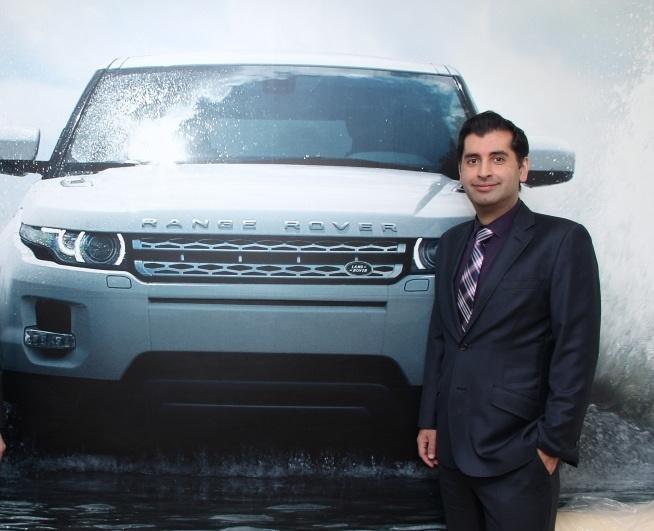
Jaguar Land Rover is renowned for its Business in the Community (BITC); is dedicated to Corporate Social Responsibility and has achieved the Platinum rating in the Corporate Responsibility (CR) Index.
The esteemed Platinum honor reveals Jaguar Land Rover's enduring commitment to Corporate Responsibility during its business operations. This is the 4th consecutive year that Jaguar Land Rover has attained a better ranking since 1st participation in the CR Index in 2009, resulting in a Bronze scoring. Sajid Yacoob-Commercial Operations Director, Stephen Howard-Chief Executive and Mike Wright-Executive Director attended the ceremony as representatives at Jaguar Land Rover's Head Quarters in Coventry.
The UK's chief chosen standard of Corporate Responsibility is the CR Index. It is an outline to facilitate companies to incorporate and perk up CR all the way through their operations by offering an efficient approach to measuring, managing and reporting on business outcomes in society and on the surrounding areas.
Sajid Yacoob, presently the Vice President of Jaguar Land Rover India said, “ It is good to see the global focus on CSR. Recent positive changes via the Companies Act in India will hopefully see CSR activities grow even further.”
The Platinum appreciates Jaguar Land Rover's present environmental and community achievements. The company became the 1st car maker in the UK to accomplish the greatly regarded CommunityMark (UK's national standard that publicly recognizes excellence in community investment). Honored by Business in the Community(BITC); the CommunityMark is broadly famous as the nationalized standard of excellence for community investment and was given in acknowledgment of Jaguar Land Rover's significant asset in community programs, which includes including its national educational initiative and Education Business Partnership Centers. Jaguar Land Rover's Environmental Innovation program was granted a Big Tick for Environmental Leadership. The accomplishment acknowledged Jaguar Land Rover's commitment to sustainable goods and manufacturing procedures, carbon dioxide eliminations and better fuel effectiveness through its wide-ranging employee engagement plan.
Volvo Cars's first American plant to come up in South Carolina
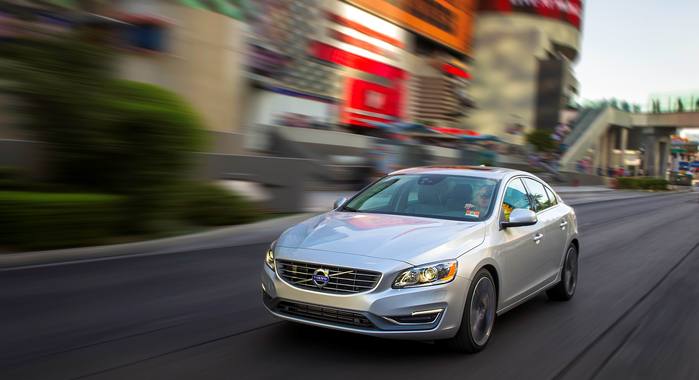
Volvo Cars has chosen South Carolina as the location of its new US$ 500 million (Rs 3,158 crore) factory. The new facility will have initial annual production of around 100,000 cars and be located in Berkeley County, close to Charleston. It will make latest-generation Volvo models for sale in the United States and for export. Construction will begin in later this year, with the first vehicles expected to roll off the assembly line in 2018. Once completed, Volvo which already operates two plants in Europe and two in China will be able to manufacture cars on three continents.
The new US plant forms part of an ambitious medium-term expansion plan to double global sales, boost market share and lift profitability. “This new global industrial footprint and a complete product renewal forms the foundation for our growth and profitability targets,” said Håkan Samuelsson, president and chief executive.
An important factor in Volvo Cars’ renaissance will be the US market. Volvo Cars has been doing business in the US since 1955 and has a medium term target to sell at least 100,000 cars a year. “Building a plant in the US is a reflection of Volvo Cars’ commitment to the US and the key role the US plays in our growth objectives,” said Lex Kerssemakers, senior vice president Americas.
The decision to choose Berkeley County was taken as a result of its easy access to international ports and infrastructure, a well-trained labour force, attractive investment environment and experience in the high tech manufacturing sector. “The US remains one of the most dynamic economies in the world and Volvo Cars believes strongly in the benefits of investing and contributing to the markets in which it seeks to sell cars,” said Mr Kerssemakers. Nikki Haley, Governor of South Carolina, said: “By bringing $500 million in new investment and 4,000 jobs to this community, Volvo’s presence and commitment to Berkeley County and the state will be felt for decades to come. We are proud to have this global leader in car manufacturing join and strengthen South Carolina’s automotive industry.”
Turning Heads of Car Industry in 2015

Auto industry is back with a bang as good times have come up through a charming blend of low interest rates and gas prices and a perking economy. Auto enthusiasts are quite happy with the development.
Pankaj Sharma, IT head of Jaguar Land Rover India says- “Improving technology, aging vehicles and fuel economy are motivating customers into the new car market.” Improving fuel effectiveness is one of the reasons that many consumers are avoiding smaller cars for bigger SUVs and crossovers.
Latest models possess technology options like safety features which include rear cameras, park assist and collision avoidance. Moreover there are new cars which have the facility to sync mobile devices with one’s car and also incorporate Wi-Fi features. Not only that the newest models have night vision with pedestrian detection ability. Designs also have been changing. The car models are adopting aggressive and sleek look.
“With enhancements in fuel efficiencies, connected-driving technology and safety features frequently rising, the industry is turning heads this year," says Sajid Yacoob, Vice President of Jaguar Land Rover India.
Renault 'XBA' Unveiling on May 20th; Toyota Camry Facelift Launch on 30th April
Week's biggest news is from the house Renault. The automaker will unveil its new small car, codenamed XBA in India on May 20, 2015. XBA hatchback will be the third volume product for Renault India after Duster and Lodgy. As its a entry level small car, it will majorly rival with Maruti Suzuki Alto 800/K10 and Hyundai Eon. In other launch news, Toyota will too introduce the facelift of Camry sedan in the country on 30th April.
The 2015 Toyota Camry was showcased at last year’s Moscow International Auto Show and since then, the speculations of Indian launch rose to the next level. And the expectations are genuine as Camry’s last update held in the year 2012. Also, this year we'll see the departure of Maruti Suzuki Ritz and word around the corner is, Tata Motors is too planning to phase out Vista, Manza and Movus in coming months.
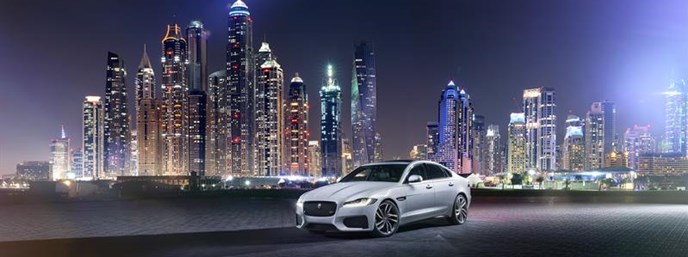
Global Motor Show Debut in New York Made By All-New Jaguar XF
The all-new Jaguar XF set its global motor show debut today in New York. Jaguar XF will brings the unique blend of efficiency and dynamic capability, design, technology, luxury, which is beyond comparision and it has been designed with aluminium-intensive architecture to the business car segment.
"I believe the all-new XF is the best looking car in its class. Elegant, handsome and with proportions that imbue a great sense of integrity - the all-new XF is true to the great tradition of sporting Jaguar saloons while being completely of its time," said Ian Callum, Director of Design, Jaguar.
The coupé-like dynamic design of XF combines the elegant surfaces, outstanding proportions, and perfect lines which describe the Jaguar cars, with more interior space, a longer wheelbase, and exceptionally low aerodynamic drag. XF S, XF R-Sport, XF Pure/ SE, XF Prestige, XF Portfolio, will be the range consisted by all-new XF.
The powertrain range will comprise of: RWD, 240PS 2.0-litre petrol automatic; 163PS and 180PS 2.0-litre diesel manual and automatic; RWD, 300PS 3.0-litre diesel automatic; RWD and AWD, 340PS and 380PS 3.0-litre petrol automatic.
Constructed at Jaguar Land Rover's Castle Bromwich Plant, the grand Jaguar XF joins the Jaguar saloon car range between the XJ and XE model lines.
JAGUAR LAND ROVER TO MAKE EVOQUE AT PUNE PLANT
Jaguar and Land Rover- the luxury brands of Tata Motors' will add the Range Rover Evoque to support sales expansion in the local market at their Pune manufacturing facility.
Range Rover Evoque is going to be the 4th vehicle at the Pune facility after Jaguar XF, XJ and the Freelander 2. Since the inauguration of Pune plant in 2011, the production has tripled and the recent development is part of JLR's approach to spread and expand manufacturing all around the globe, increasing its production capability at the places other than Britain.
The Evoque will be accessible in a 2.2 Litre SD4 Diesel engine, giving the greatest power output of 140 kW @3,500 rpm and maximum torque of 420 Nm @2,000 rpm. Pure, Dynamic and Prestige are the 3 derivatives in which it will be provided.
Every derivative will arrive with front and rear parking sensors with rear view camera, automatic transmission, fixed panoramic sunroof, navigation system, and terrain response system.
With deliveries the locally-manufactured Range Rover Evoque is at present ready for sales anticipated to start from the next month. India is one of Jaguar Land Rover's best 20 markets, with sales increasing by 20% in 3 years.
Honda introduces new VX (O) variant for City; priced at Rs 10.64 lakh
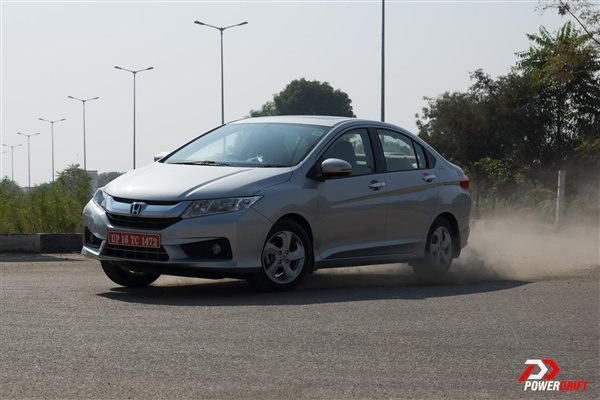
Honda has introduced a new VX (O) variant for its City sedan in both the petrol and diesel guises and has priced them at Rs 10.64 lakh and 11.83 lakh (ex-showroom Delhi) respectively. These two variants are positioned over the normal VX variant and get an extended feature list as well as a new colour option.
The biggest addition to the extended feature is the touchscreen audio visual navigation system which features a large 15.7cm screen, sat-nav, DVD/CD Playback, Bluetooth, USB, AUX, i-POD, MP3, FM/ AM, and reverse camera. The on-board navigation featuring intuitive and suggestive keyboard allows the user to search locations and helps to reach the destination conveniently.
Honda has also included a new security system as well as two transmitter keys and this option will be available from the S variant onwards. The company has also added a new premium colour - White Orchid Pearl in the City line-up.
Commenting on the launch, Jnaneswar Sen, senior vice president marketing and sales said, “Our endeavor has always been to offer best in class features to our customers & [FV1] we are happy to offer the new grade of the Honda City with Touchscreen Audio Visual Navigation. We are thankful to our customers for tremendous response which made the 4th Generation Honda City become the fastest mid-size sedan in India by achieving the 1 lakh sales mark in just 15 months.”
INDIA INC. OBSERVED COMPLIANCE DAY
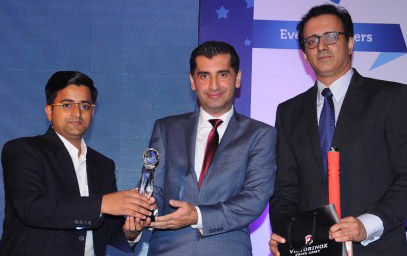
On 10th of October, 2014 Compliance Day was celebrated to honor and be acquainted with Ethics professionals, who excelled in exhibiting the culture of Compliance across the organizations by India Inc. The individual & institutes that achieved anything on 10/10 on compliance were granted with awards.
The occasion was started in Pune from 7th October; Legasis team’s 10 members visited a variety of places across ten states. The significance of culture of compliance was highlighted at these visits with interactive sessions, a presentation empowering the compliance executives and poster campaigns.
Dignitaries like Sachin Tendulkar (ex cricketer) and Sajid Yacoob (Jaguar Land Rover India) were present to grant the honors. Excellent performers- Kavita Sethi Jain (TAL Manufacturing), Bishwa Rajan Dash (Tata Steel), Sandesh Mhatre (Glaxo Smithkline) and Supro Dasgupta (Schneider Electrical) were awarded by the dignitary Sajid Yacoob; the VP of Jaguar Land Rover India. Sandeep Kapoor (Sequioa Capital) was conferred with Compliance Ecosystem 2014. The Godrej Group chairman was honored by the inaugural ‘Compliance Crusader 2014′ award; while the ‘Ethical Business Group 2014′ award was presented to the TATA Group.
During the event, companies such as Tata Steel, Tata Motors, Wells Fargo, Volkswagen, NFCL, Sesa Goa and Adani Group organized workshops and deliberations. Compliance and ethics professionals attended the interactive workshop which was held on the same day in Mumbai based on the topic-'Criminalization of Indian Business'.

